Showing posts with label communion. Show all posts

Tuesday, July 23, 2019

The Holiest Thing We'll Ever See


The Christian author C.S. Lewis once wrote: “Next to the Blessed Sacrament itself, your neighbor is the holiest object presented to your senses.” 


By Blessed Sacrament, Lewis meant the bread and wine of communion, and it's probably not surprising he would consider that the holiest thing we will ever see. What may be surprising is the second part of that statement; that after communion, the holiest thing we'll ever see or touch is another human being.

That's right: sloppy, dirty, imperfect human beings are holy. Your co-worker who can't pick up after herself is holy. That whiny child in the store is holy. The jerk who just cut you off in traffic and almost caused an accident is holy.

Humans are holy because we're created in God's image, because Jesus considered us precious enough to live and die for our benefit, because, like the bread and wine of communion, God's presence can somehow become real in us.

We humans do not always live up to that holiness or show it on the outside. When I say "Jesus loves you" to that jerk in traffic it's usually sarcastic instead of a statement of fact, but I have found that when I can take Lewis's words seriously, it makes a difference in how I treat people. When I think, "God loves this person" I can find a little more patience, a little more understanding, and find myself a little less frustrated or angry.

If we can more frequently find the faith to believe that one of the holiest things we'll ever be close to another human being, perhaps we can see the Holy Spirit breathe a little more peace into this world. And that would be blessed indeed.

Standing in the Gray,
Pastor Ari


“You're everywhere to me; when I catch my breath, it's you I breathe.” -Michelle Branch, "Everywhere"

Friday, November 16, 2018

The Third Sacrament


(Note: This was first written for my church's winter newsletter in December 2018)

In the Lutheran church, we acknowledge two sacraments: communion and baptism. Martin Luther felt there needed to be some Biblical basis for defining a sacrament and cut back on the total of Roman Catholic sacraments. The definition he settled on had three parts: a sacrament had to a) be commanded by Jesus, b) have a physical sign, and c) have a promise of grace attached to it. 

A few practices and traditions that are important to us fail to be a full sacrament because they lack one of these three. Confession and forgiveness for instance is commanded by Jesus and has a promise of grace, but not a physical sign. Foot washing is commanded and has a physical sign, but not a promise of grace. 

Over the years of being a pastor, I’ve come to believe there is a third sacrament that should be acknowledged and celebrated in church. I believe it is a sacrament even though as far as I know it isn’t acknowledged as one in any denomination. I believe the third sacrament is us, the Church itself, the Body of Christ. 

I could spend more time explaining my thinking, but in short, I believe Jesus commands us to be together (John 14:20-21), promises us grace when we come together (Matthew 18:20), and there is a physical sign — each other. 

I share this idea with you because we are heading again towards the seasons of Advent and Christmas. In these seasons, we share presents and carols and egg nog, but at their heart is an idea closely tied to this third sacrament: incarnation or God made flesh. In this time of year, we remember the arrival of God’s son, Jesus, in human form. In taking on flesh, he became a blessing to those around him, a source of light in a time of darkness, and a sign of God’s love to those in need. 

In another time that feels full of darkness, there is comfort in this story. Our politics are a mess, natural disasters and mass shootings seem to happen weekly, wars continue to rage around the world and even allies don’t seem as trustworthy as they once did. That God took flesh to offer hope and life in a similar time is a sign of grace, but we need also remember it is not in the past. 

Jesus didn’t just come in the flesh; he comes in the flesh. And just as he did in Palestine centuries ago, he still comes to be a blessing to those around him, a source of light in a time of darkness, and a sign of God’s love to those in need. Because of the work the Holy Spirit continues to do in us, I believe we are a sacrament, a source of grace and life to each other and the world around us. 

May we know the presence of Christ this holiday season. May we see Christ take flesh in those around us and may we be open to how God takes flesh in us. May we be surprised (have “epiphanies”) about the ways God is working around us. And may God use us to be a blessing to the world around us. 

From the Gray,
Pastor Ari


"When everyone you thought you knew deserts your fight, I'll go with you." -twenty one pilots, "My Blood"

Thursday, May 17, 2018

Flour Power

At my church, children who don't take communion yet get a blessing when they come to the table with their family. Usually I rest my hand on their head as I bless them and trace a cross on their forehead to remind them of their baptism.

As I do, there is often an unintended side effect.

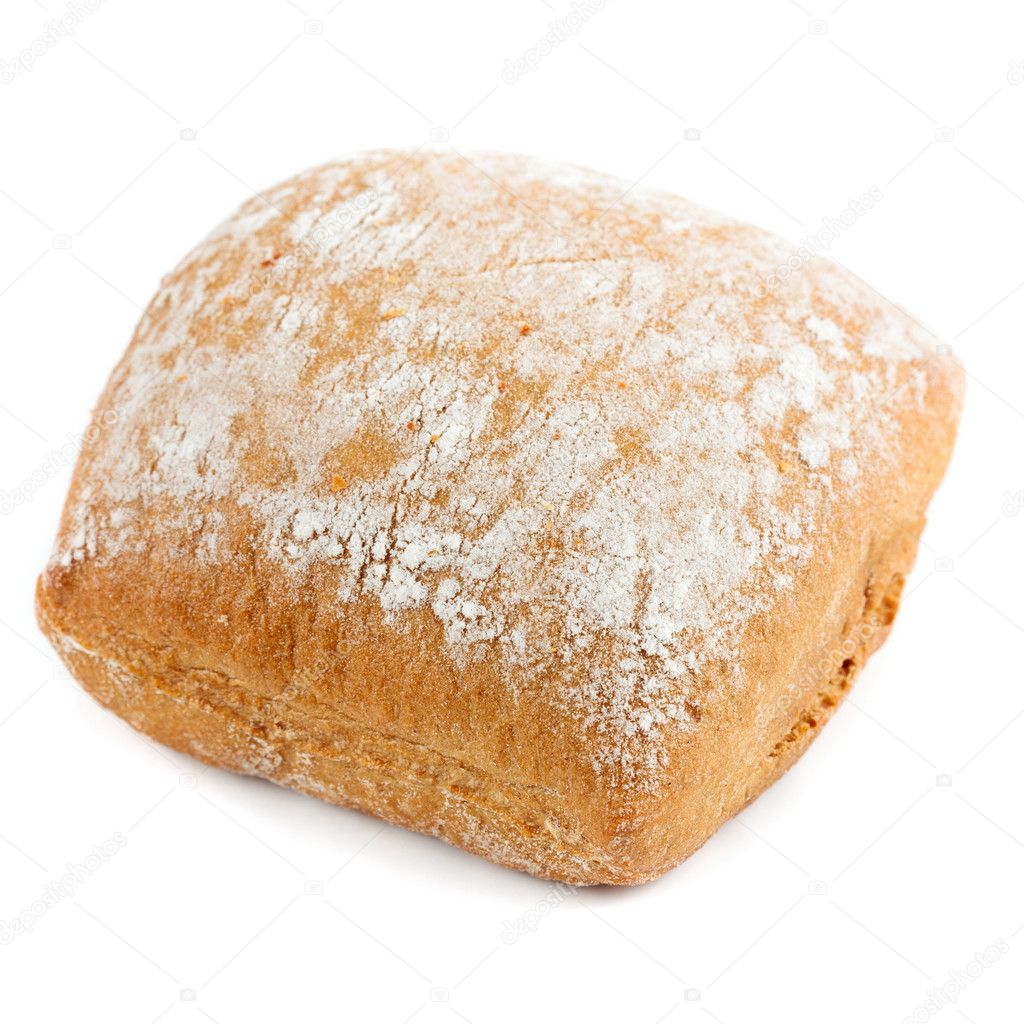
That's because we also use homemade bread for communion at my church (yum!) and it has flour on it from the kneading process. So when I bless the children, they end up with a dusting of flour that my hand has picked up from the bread. They leave the table with a visible residue of God's blessing for them in their hair.

It helps me to remember that what we hold on to will leave a mark on things we touch. What am I holding on to and what kind of residue am I leaving behind me? Are my hands dirty with grime or with grace?

I hope and pray that my words and actions dust the world with blessings and I hope yours do, too.

From the Gray,
Pastor Ari


“I want the markings made on my skin to mean something to me again.” -twenty one pilots, “Doubt”


Friday, September 16, 2016

Setting the Table of God

This past Sunday, through one of those situations that happens from time to time, my congregation found ourselves without our usual communion bread for worship. We have a wonderful team of volunteers who make homemade bread for us every week, but last week, none showed up. Thankfully, we keep a box of wafers around just in case and we pulled them out for the holy meal this day.

For anyone who isn't familiar with communion wafers, they are thin, tasteless discs about an inch in diameter that are engineered to dissolve quickly on the tongue and have a shelf life of about one hundred years. I jokingly refer to them as "crispy Christs," but for many people who grew up in the church in the twentieth century, these wafers were the norm for years.

For kids at Martin Luther Church, though, they are not.

This fact became clear during communion. Several appeared puzzled. One young person audibly said, "ugh" when I handed him the body of Christ. Another looked at it with a confused expression and then handed it to his mother.

At the time, I chuckled to myself over their honest reactions. As I thought about it later, though, I realized there was more than a "kids will be kids" truth to their reaction. They came expecting good food at communion -- and why shouldn't they? If "this is the Lord's table" (which I say every week), and our Lord is generous and loving, why shouldn't we expect good food at God's table? If the Lord's Supper is meant to be a "foretaste of the feast to come," I think fresh bread and a decent cabernet is a better representation of that feast than stale wafers and Manischewitz.

Going beyond the quality of communion, I think the same could be said about other aspects of church as well. Do we participate half-heartedly in worship? Do we allow clutter and disfunction to persist in our church? Do we serve weak coffee and stale cookies? (Seriously, why can't more churches make a decent cup of coffee?) Or do we offer our best as a community to both regulars and guests as a reflection of the great gift we've received in Christ?

Now, giving our best isn't the same as being perfect, but I believe we should act as though what we are doing matters to us and furthermore, we want it to matter to those around us, too. How do we set the table of our church on Sunday and our lives during the week so that people come to expect the best of God when they gather there?

From the Gray,

Pastor Ari


“I know you’re supposed to be my steering wheel, not just my spare tire.” -Arrested Development, “Tennessee”