Showing posts with label cross. Show all posts

Friday, April 7, 2017

Norse Gods and the God of Easter

My daughter and I recently finished reading "Norse Mythology" by Neil Gaiman, which retells the old myths in ways that a great storyteller like Gaiman can. Being part Norwegian, my daughter and I both love these stories that reflect the fears and dreams of our ancestors.

But I also think about how flawed these gods are. Much like their Greek counterparts, the gods of these ancient myths are often selfish, vain, hotheaded, violent, deceptive, or just foolish. In other words, they are very human... except with more power to cause trouble.

All of these old stories are one of the reasons I continue to believe in the God of the Bible, and especially the one found in Jesus Christ.

Unlike the gods of ancient mythology, the God I find in the Bible very unhuman. To be sure, God has many human characteristics. God gets angry, jealous, and impatient at time. God weeps with sadness. But the God of the Bible is different in that this God isn't motivated by selfishness or human ego. Just the opposite. The overarching story of the Bible is of a God who persistently tries to reconcile with creation, who reaches out to help and serve. In fact, almost every time God is angry, jealous, or weeping, it isn't because he's childish; it's because humans don't accept or understand the love he's trying to share with them.

This coming week is Holy Week, when we will retell the central story of the Christian church: that God loved humanity so much that God put aside his power and became human, not to cause mischief or trouble, but to heal our separation, to serve others, to willingly be humiliated and receive the brunt of our human condition (fear, anger, hatred, violence), die and be resurrected so that the negative parts of us might be overcome and no longer poison us. This is not how most humans would act. This is not a story we find in most ancient mythologies.

And that's why I find it believable.

If I were to make up a story about God and the universe, it wouldn't be a story about a powerful being seeking weakness and service or asking me to sacrifice and turn the other cheek and love my enemies. If I were to make up a god, it would act a lot like me and/or reinforce my natural inclinations to seek vengeance and be self-centered.

But the God of Easter asks me to die with him so I might be raised again. The God of Easter asks me to live with faith, hope, love, compassion, and generosity, not strength or wealth. The God of Easter has made himself vulnerable for my benefit so I might be vulnerable for the sake of others.

I couldn't make this story up. So I trust in it and I try to live it.

From the Gray,
Pastor Ari


“Not much of this makes sense to me.” -Guster, “Happy Frappy”

Thursday, October 15, 2015

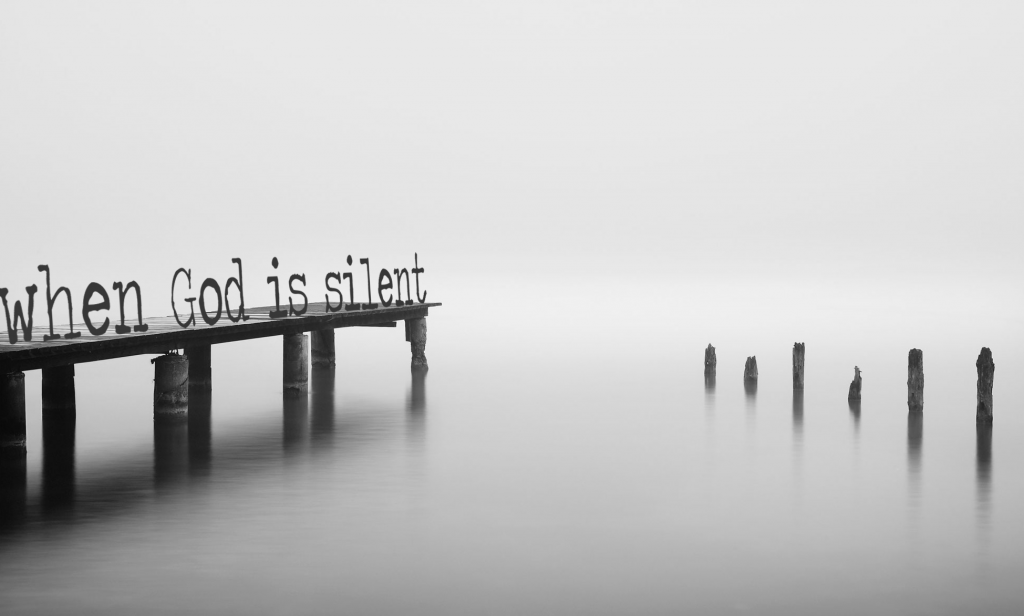
When God Doesn't Answer (Blog on Job, Part 2)

(This is part two of my blog on Job. You can read part one by clicking here.)

Last week, I mentioned that two great questions get raised by Job: Why has this happened to me? and Why would God allow this? In the second text assigned for reading in the lectionary this month, Job voices his pain when those questions go unanswered by God. 

In Job 23:1-17, Job cries out that God is not answering his prayers, saying, "If I go forward, he is not there; or backward, I cannot perceive him; on the left he hides, and I cannot behold him; I turn to the right, but I cannot see him" (vv. 8-9). These verses (echoed many other places in the book) capture why so many people read and study this book. 

Job asks one of the profound questions of faith: Where is God when we suffer? And why does it so often feel like God is distant in times of pain?

These are questions that I am asked all the time. They are questions that I ask all the time. 

They are questions that deserve careful examination because they are a part of everyone's lived experience. We all are afflicted at times with loss, pain, suffering, and disease. We will all likely think things can't possibly get worse only to be proven wrong. 

Because they are so universal, they are questions that have led to much spilled ink over the millennia (including the ink originally spilled to write Job) and it would be impossible to settle them in one blog post. (Job alone spends 42 chapters trying to answer these questions and still leaves them partly unanswered.) But there are a few points we can draw from the Bible in and around Job that help shape how we ask the question today.

When God Speaks, It's Rare


When we read the Bible, it seems as though God is answering prayers and saving the day left and right. God has prophets and priests and rulers hearing God's word and doing miracles all over the place. It can lead us to wonder why God has stopped speaking and acting as much today.

But if we look more closely, we see that many of the stories of the Bible the highlights in a long timeline, kind of like SportsCenter showing all the runs from a three hour baseball game in thirty seconds. In fact, there are long periods of silence from God within the Bible. The Israelites are enslaved in Egypt for generations; the period of Judges has years of suffering in between a few heroic battles; and there are four hundred years between the Old and New Testaments. 

God's silence seems to be the rule more than the exception for much of the Old Testament. Why that may be is hard to say, but it is clear that God does not speak out of burning bushes to every person in trouble, then or now. 

So does that mean that God just doesn't care? Does God ignore us most of the time? The Bible says "no," because...

When God Speaks, It's Hopeful


When God does speak in the Bible, it's often to offer comfort and hope. (God's response to Job doesn't really, but I'll get to that next week.) God makes it clear that he doesn't intend suffering for those who trust in God and promises that there will be a time when all we be right. Even if we don't experience justice or an end to suffering in this life, God's final word to us is hope.

In the Bible, God shows care for us in the midst of our suffering because God often sympathizes with us, joins us in our mourning, and cries over injustice in our world. Most importantly, we see God choose to physically enter our suffering and walk alongside us in the person of Jesus. Jesus seeks out those who suffer and answers their questions with himself. Rather than be indifferent, God promises to be present with us in this life.

But why then does it not always feel like God is with us in pain? Why does God feel silent?


When God Speaks, It's...To Voice Our Question? 


The Bible is filled with people and poems asking a version of Job's question. The Psalms are full of so-called songs of lament, crying for the God that feels distant. Perhaps the most famous of these is Psalm 22, which bears a great resemblance to the crucifixion of Jesus in the New Testament. In fact, the opening words of the psalm, "My God, my God, why have you forsaken me?" are spoken by Jesus on the cross. 

And there is the great mystery and hope of this difficult question. The wrenching cry of "Where are you?" spoken by Job and the psalmists is also spoken by God the Son in his time of suffering. And the immediate answer is silence... and death.

The meaning of that moment in history is profound. Jesus shows that God hears our suffering, God comes near us in our suffering, and God experiences our suffering to the point of despair.

There are some who will say that asking the questions that Job and the Psalmists raise is a sign of weak faith or is unfair to God. They may say that we must simply trust "God's plan" and never question God. But when Jesus cries from the cross, he validates all of us who ever sit on the ash heap with Job and ask why we're there. Without offering the answer to why there is suffering to begin with, Jesus makes it okay to keep raising the question. Even without the example of Jesus, the author of Job is clear to say that Job "did not sin with his lips" (Job 2:10), meaning all of his questions did not separate him from God. 

One of the lessons of Job is that even when we get no answers, there is no sin in asking the question. Even if we get no answers, asking the question puts us in the company of Jesus. 

From the Gray,
Pastor Ari


"Cuz I, I got a question... I got a question: Where are you?" -Jars of Clay, "Silence"

Next time: Living with Mystery...

(If you are interested in exploring the question of God's presence in suffering in more detail, I strongly recommend two books. In "Where's God When It Hurts?," Philip Yancey asks this question very directly and uses Job to explore it in depth. For a fictional approach, read "Silence" by Shusaku Endo, a classic novel about Christians persecuted in the era of feudal Japan.)


Thursday, April 9, 2015

Unregulated Grace (A Throwback Post)

(Note: This was originally written for my church newsletter in Spring of 2009.)

“There needs to be more regulation.”  This is the consensus that has come from most politicians and national economists in the wake of the Wall Street mortgage meltdown in 2008.  Amid all the finger pointing and shoulder shrugging, this seems to be the one thing on which most people agree.  Over the past fifteen years or so, the argument goes, government was too soft on the business sector and gave them unprecedented freedom by deregulation.  Business then took that freedom and went crazy, making deals that were so complicated and twisted that after months of scrutiny by numerous accountants, no one seems to know how broke the major firms really are.  The cost of excessive freedom has proven costly indeed.  The solution to fixing the mess and preventing its recurrence has been a call for there to be more oversight and greater control to keep CEOs and companies from running amok with people's money.  If deregulation was the problem, then regulation is the answer.

As we move through Lent and prepare for Easter, I spend a lot of time thinking about the cross.  As Lutherans, the cross is at the heart of our theology, but is especially present during Lent and Good Friday.  As I was thinking about it recently, with the news of our economy in the back of my mind, an amazing thought struck me: God's grace is unregulated.  That's right, God's grace has no regulations.  In this time when everyone is clamoring for greater oversight and tighter controls, God continues to operate without any restrictions.  Now, this is not to say that God could be regulated or controlled, but the wonder is that God chooses to operate without any restrictions.

Think about it.  We confess that we are saved by grace alone, meaning that it is God's gift to us and that we can have no effect on God's decision to give it to us and that the promise is good into eternity.  In other words, we receive salvation without any preconditions and free from any revocation clauses.  It is completely unregulated.  God simply throws it around willy-nilly.

Think about the story of the Prodigal Son (or Expectant Father) in Luke 15. When he sees his lost son returning the father runs (runs!) to meet him, embraces him and immediately calls for a celebration.  The son doesn't even get a chance to apologize.  And the father doesn't scold him; he doesn't give a don't-do-it-again warning; he doesn't ask for an accounting of his fortunes.  The father embraces him. That is unregulated love.

But wait! We've seen where this can lead.  Without regulations, people run amok, they go beyond the bounds of common sense or decency and act solely for themselves.  That is true for banks and for grace.  Because it is unregulated, we are free to treat God's love however we wish. We are free to ignore the cross. We are free to yawn as we are told of Christ's sacrifice for us.  We are free walk away from the greatest free gift we could ever receive.  Many do.  And yet God continues to insist on a deregulated grace market and throws around the capital like a stimulus bill on crack.  Such is the scandal of grace.

However, if we have received this gift and properly appraised its value, how can we not act appropriately?  How can we not use this gift for the good of all people?  How can we not respond with generosity and joy?  What end could possibly be greater than the one God intended for us?  We're free to ignore it, but why would we?


As people continue to demand greater accountability from Wall Street and controls on the markets, there is one place where deregulation has always been the norm and always will be. God pours out his grace upon us in unregulated fashion so that we are free to live life however we want.  How will you choose to live yours?

From the Gray,
Pastor Ari

“You’d see that we should never be afraid to die.” -Muse, “Uprising”