Showing posts with label pain. Show all posts

Tuesday, October 23, 2018

What is Appropriate Prayer?

For the past month, Milwaukee has been buzzing. Our local Major League team, the Brewers, was on a tear. They finished with the best record in the National League, made the playoffs for the first time in seven years, and won twelve in a row to win the NL Central title and sweep the first round of the playoffs. It has seemed like everyone was wearing Brewers gear and talking baseball in our area.

On Saturday, the Brewers hosted game 7 of the NL Championship against the LA Dodgers with a chance to go to the World Series for the first time since 1982 and the city was electric.

But they lost. No World Series. No more season. There was no joy in Mudville, for mighty Casey had struck out...

The next morning, during the late worship service at my church, the assisting minister added an impromptu petition to the prayers that was something like: "Lord, help us in our grief over our baseball team losing. We wanted to go to the World Series and it hurts. Help us get over it and look forward to next season."

In the moment, I didn't know exactly what to think about the prayer. I wondered if some would be offended by including something like a sports team in the prayers. Would some feel it wasn't appropriate for the prayers in church? Did I?

As I continued to think about it, I remembered that I myself often tell people there is no bad prayer. "Prayer," I say, "is just speaking honestly with God." I sometimes use the examples of Psalm 137 or Psalm 109, where the writers pray for God to bring suffering to their enemies. I also use them as examples of the truth that God is with us in times of pain and suffering. If those bitter songs are saved as examples of prayer in the Bible, we can be honest with our own pain, anger, or whatever we feel.

As I thought about it, I realized this prayer was speaking honestly with God. She was saying, "Sure, it's just a baseball team, but a lot of us here are hurting today. If you're with us in any suffering, please be with us in this time of pain." In a different situation, it might have been silly or frivolous, but on that morning, it was true and sincere. That, I believe is God's hope for our prayers, because when we are honest about ourselves, we can be more open to what God has to say to us.

May we all be reminded that there is no part of our lives that is beyond God and nothing that God doesn't want to hear from us. 

From the Gray,

Pastor Ari


“I’m-a say all the words inside my head.” -Imagine Dragons, “Believer”


Thursday, August 16, 2018

A Response to Clergy Abuse in Pennsyvania

Photo: Keith Kelly via flikr
This week, a major report was published in Pennsylvania detailing how 301 priests sexually abused at least 1000 victims in every diocese in the state. Even more damning that previous similar reports, this one detailed how priests, bishops, and other church leaders conspired to commit and cover up these crimes over decades.

There is so much about this scandal that makes me angry.

I'm angry that anyone would sexually abuse children. It's beyond awful and even worse that they knowingly covered up the crimes. It's terrible to think about the number of lives that have been forever altered by this abuse.

I'm angry that the actions of these priests besmirch my profession and the Church I love. I'm angry that MY integrity is suspect because I wear the same uniform as them. (Though these offenses are the least of the crimes they've committed.)

I'm especially angry that it seems every level of leadership so radically failed to be the Church, the Body of Christ for the sake of the world. Christians are called to be light to the world, to care for the vulnerable and serve the needy, yet church leaders took advantage of the vulnerable, served their own desires, and worked to keep it all in the dark. For years and years. Shame on them.

I'm angry that after almost twenty years of clergy abuse being reported, Roman Catholic leaders still struggle to make a sincere apology and have an earnest investigation of their records to punish and defrock anyone who committed these crimes or covered them up. Truth and justice are core to Christian principles and yet church spokespeople often seem more concerned with protecting their reputation and money. (It was reported this week that some church leaders fought to prevent this report from going public over fears it would lead to bankruptcies. Again: shame.)

And this is not an anti-Catholic rant; I have deep love and admiration for many Roman Catholic people and institutions and would use these same words were it my own denomination. My love for my Roman Catholic sisters and brothers is partly why I'm so furious. How could something with so much good be used to defend and hide evil for so long?

As a Lutheran, I believe we are "simultaneous saint and sinner," imperfect people in need of God's grace. I believe there is forgiveness for our failures, but we must confess our brokenness, bring the sin into the light to be transformed. The church should be leading the world in how to name sin, practice justice, and seek restoration, but here it followed the world's lead in practicing selfishness, abuse of power, and worship of money.

Every Christian institution should look hard at this and pledge that we will do better. We seek to be righteous, but when we fail, we must confess our sin, seek justice, and face consequences when necessary. We must side with and support victims, even when it may cost us.

As a Christian, I also believe in resurrection and that God can bring new life out of terrible events. I pray that can happen here, but before there can be resurrection, we need to make sure this past is dead and buried.

From the Gray,

Pastor Ari


“The past is gone, but something might be found to take its place.” -Gin Blossoms, “Hey Jealousy"

Tuesday, June 12, 2018

Let's End Suicide


(Note: I first wrote this on my facebook page.)

I've never watched Anthony Bourdain.

Until last week, I'd never heard of Kate Spade.

But I learned I have at least one thing in common with them. I have known the dark night of the soul where voices in my head have been speaking the mantra that I'm a failure and my life isn't worth continuing. There have been times my depression and anxiety were so overwhelming that stepping into nothingness has sounded like a relief. 

I thank God that in those moments I heard another voice. I thank God that I found a therapist, a psychiatrist, and a medication that have stabilized my condition so that I'm fine 99% of the time and no longer have suicidal thoughts. And today I grieve with God that Anthony and Kate and roughly 100 Americans per day did not.

Since I found a way to manage my mental health condition, I've made one of my life's goals to #endthestigma around mental health issues so that more people might find the help they need and those who don't have mental health issues can better ally with loved ones who do.

As this article suggests, the first step is recognizing this is a disease. Just as a diabetic can't will their body to create insulin or a cancer patient can't focus on the positive to heal their cancer, I cannot will my brain into balancing my serotonin levels. 

When I get the flu, people don't tell me to "get over it." They wisely suggest I sleep, see a doctor, drink fluids, etc.  When I have an episode of depression or anxiety, I have a "mental flu" and I need to care for the "infection" just as I would the flu. 

So, if you want to help someone who lives with a mental health issue, here's what I find helpful: 
-Listen without judging or trying to fix things. Unless you're a doctor, you can't fix cancer and you can't fix depression, so don't try. Just listen, empathize, and assure the person you love that you care and they aren't alone. Words like, "That sounds really tough" can feel inadequate, but go a long way to building a healthy connection.
-Tell the person it's okay to care for themselves. It isn't selfish to go to the ER when you have a broken arm and it isn't selfish to treat a mental health episode...but it sure feels that way when you're having one. Letting someone know the world won't fall apart and they will still be loved if they take time to care for themselves is important.
-Ask for guidance in helping. What you think may be helpful might not be to someone in crisis, so ask what is and don't minimize it if it seems small. Something like emptying the dishwasher for me can be a release valve that makes bigger things manageable.
-Check in regularly. When appropriate for the individual relationship, ask how they're doing and don't be afraid to name the disease. I have one friend who's very good at asking, "How's your anxiety been doing?" It helps because I know he cares and it makes it feel normal.

If you live with depression, anxiety, bi-polar, or other mental health issues, YOU ARE NOT ALONE and YOU HAVE NOTHING TO BE ASHAMED OF. There are millions of us who live with, struggle with, and manage a mental health issue. If you don't already, please take steps to care for yourself. 

That may include a therapist or a medication and there's no shame or weakness it that. 

It should definitely include some loving friends who know your struggle and can support you in ways that are helpful to you. I'm happy to be one of them.

And if you ever find yourself listening to the voices that say life isn't worth continuing, then find another voice. Remember MY voice telling you this: "That other voice is lying to you!" If you are religious, remember God's voice saying, "You are my beloved child. I want to create life where things seem dead." Find a voice on the National Suicide Hotline at 988. But find help. Now. 

Your life matters to me and to more people than you realize.

From the Gray,
Pastor Ari


“Even if we can’t find heaven, I’ll walk through hell with you.” -Rachel Platten, “Stand By You”


Saturday, March 25, 2017

Shame, Confession, and True Identity

This past Sunday, I was privileged to have a member of my church's preaching team provide the sermon. I love getting to hear others preach because it helps me hear other facets of the text and fresh perspectives that help me shape my future sermons.

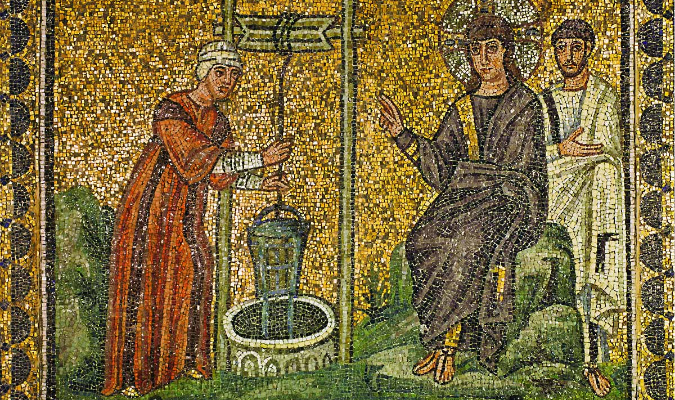
In her sermon (which can be heard here until late April), Carla had a line that cast a fresh light on one of my favorite Bible passages, the woman at the well in John 4. Noting that the woman is gathering water at an unusual time of day, Carla suggested, as most commentators do, that she had been shunned by her neighbors who come in the morning. But then she asked, "Or is it her own self-doubt?"


I'd never thought of that. Shame is a powerful force for tearing us down, but it isn't always imposed from someone else. It can come from ourselves, too. Was this woman shunned by her community or did she exile herself? What little we know of her ("You've had five husbands" v. 18) means she's been widowed or abandoned five times (women didn't have legal standing to seek divorce then). She's known a lot of heartache. I'd never considered that her heartache could be causing her to isolate herself in shame. Perhaps she tells herself, "You're unlovable. They don't want to be near you. You're such a failure."


We all carry such voices around with us; little shame demons that point to our failures (actual or perceived) and our flaws (real or not). They can be rooted in minor incidents from our childhood that scarred us deeply or from repeated behaviors that we can't seem to stop doing. They can be from things we've done, things done to us, or things we've failed to do. They show up in phrases we repeat in our heads:
  • "I'll never really belong at work/in my family/with my friends/at church because I'm imperfect/stupid/different/flawed." 
  • "I'm just not cool/interesting/funny/attractive and someone's going to figure that out."
  • "If I don't keep my life balanced perfectly, I'm going to disappoint people and they'll stop liking me."
  • "If people really knew what I was like..."
Like the woman at the well, shame can lead us to avoid people, hide part or all of ourselves, or just believe that we're not that good or worthwhile.

All of this is why I love that our order of worship in the Lutheran church always begins with confession and forgiveness. Some people look at confession as a negative thing that creates shame by forcing us to think about how bad we are, but I don't.

For me, confession is confronting the shame that I carry with me and the voices that point out my flaws and then being reminded that they don't define me; that's not who I really am.

Because when I stand at the baptismal font each week during confession and splash in the "living water" that Jesus promised the woman at the well, I'm reminded that I'm a child of God, claimed by God's promise of eternal life. My shame and faults that make me feel worthless don't get the last word because I'm someone worth dying for according to Jesus.

My true identity is found in my baptism. When shame leads me to hide away, to avoid the crowds and come to the well in the middle of the day, I can remember that God's identity for me gives me a second chance. I don't need to fear living life fully or being vulnerable because the things I may feel shamed about (by others or myself) don't have to define me. God can reconcile and redeem the points of shame into empathy, wisdom, and compassion for others.

We don't need to live in shame or hide from the crowds. We don't need to listen to the negative voices tearing us down inside. The voice of Jesus says we're forgiven, loved, and adopted as children of God. That's our true identity.

From the Gray,
Pastor Ari

"Here in my head full of shame, you pick me up and say I look like You." -Jars of Clay, "Sing"

Friday, March 17, 2017

Addressing Mental Health in the Church

A friend shared this article from the Washington Post on facebook a few months ago and I've found myself thinking a lot about it ever since. In the essay, Charlotte Donlon writes about living with bipolar disorder, her faith, and her frustration that the church rarely addresses mental illness in meaningful ways, if at all. For me the essay cuts me in a couple different ways.

First, as a pastor, I read how the author's pastor dismisses her mental anguish in conversation and unintentionally shames her in a sermon and I cringe. I cringe because on days where I feel like less than a superhero, that's what I worry I'm doing. I am in near constant fear that I will say something that shames or hurts someone without me meaning to or that I just won't have the right words to say to help. I've learned in my ministry that there are many times where the only true answer is "I don't know." But when someone comes to me with a difficult question looking for some kind of help or hope, it rarely feels like that level of theological honesty is the right answer. Chronic illness, serious childhood diseases, and sudden deaths are all things that make me want to scream "Why God?" with everyone else.

At the same time, I resonate strongly with Donlon's essay because it's my own story, too. I've lived with depression for my entire adult life and shortly before I first read this essay, I was also diagnosed with a generalized anxiety disorder. I have more family members and friends that live with mental health issues than I can count on one hand and I know they are not uncommon in the faith communities that I've served. And yet, there is still a stigma around mental health.

Many churches do awesome work around feeding programs, addiction recovery, poverty assistance, and even healthcare, but it's interesting to me how almost all those programs are directed externally. Meanwhile, internally, few churches in my experience foster an environment that normalizes things like mental health, divorce, addiction, autism, and other issues that are, in fact, normal for most people. Instead, many of us put on masks and pretend to be what we think is "normal" and think we're the only ones faking it.

I don't have any answers for fixing this, certainly not on a grand scale, but I am a big fan of Brené Brown's work that says risking vulnerability and honesty is the root of joy and wholeheartedness and I know Jesus said "the truth will set you free" (John 8:32). So I hope that being vulnerable and honest about my own struggles with mental health might start to normalize it for others.

So...

I have anxiety and depression. I'm medicated for it now and it's helped me a lot. Most of the time I'm fine, but like arthritis or diabetes, it can flare up at times and I can't function at 100% when it does. I'm not ashamed about living with anxiety and depression. In fact, sometimes I think of them as my super powers because I know they are closely connected to my drive to be my best and my creativity.

And I know I'm not alone. And if you're like me, then neither are you.

I pray this is something we can talk about more and I pray that the gift of God's grace gives us the confidence to make being normal... well...
normal.

From the Gray,
Pastor Ari

P.S. If you struggle with depression or think about hurting yourself, please get some professional help. If you can't, have a friend help you. Take it from me: things can get better.


“There’s one more thing I want to say: Our brains are sick, but that’s okay.” -twenty one pilots, “Fake You Out”


Friday, November 6, 2015

What is Normal Anyway?

This morning my church hosted a network meeting of Cross+Generational ministry workers in our area. In the course of our conversation, we discussed mental illness and the difficulty many people have talking about their own or a loved one's mental illness, even though it isn't nearly as unusual as people think.

We stigmatize many issues like mental illness as not being "normal" and therefore feel uncomfortable talking about them, but perhaps the problem is our idea of "normal."

Statistically, it is more likely than not that you or someone you love has experienced mental illness, addiction, miscarriage or fertility issues, incarceration, sexual assault, or abuse. By definition, then, it isn't the person who has never dealt with any of these issues that is "normal," it's all the rest of us who have. And if that's the case then why do we so often treat all these topics as taboo or strange? Especially in church?

As I think about this further, isn't it in the Bible and Christian theology that it's normal to be broken and imperfect? That we experience troubles?

Jesus said he came not for the healthy but the sick (Mark 2:17), and he meant the sin-sick, the heartsick, the sick and tired of life, and sick to death of hiding my troubles.

If that's true, then church is where we bring our struggles and hurt to break down stigmas and taboos, not where we hide them. Then church really is for normal people, but normal doesn't mean what we thought it means.

From the Gray,
Pastor Ari


“We made an art out of neglecting what we don’t want to see.” -Jars of Clay, “Skin and Bones”


Thursday, October 15, 2015

When God Doesn't Answer (Blog on Job, Part 2)

(This is part two of my blog on Job. You can read part one by clicking here.)

Last week, I mentioned that two great questions get raised by Job: Why has this happened to me? and Why would God allow this? In the second text assigned for reading in the lectionary this month, Job voices his pain when those questions go unanswered by God. 

In Job 23:1-17, Job cries out that God is not answering his prayers, saying, "If I go forward, he is not there; or backward, I cannot perceive him; on the left he hides, and I cannot behold him; I turn to the right, but I cannot see him" (vv. 8-9). These verses (echoed many other places in the book) capture why so many people read and study this book. 

Job asks one of the profound questions of faith: Where is God when we suffer? And why does it so often feel like God is distant in times of pain?

These are questions that I am asked all the time. They are questions that I ask all the time. 

They are questions that deserve careful examination because they are a part of everyone's lived experience. We all are afflicted at times with loss, pain, suffering, and disease. We will all likely think things can't possibly get worse only to be proven wrong. 

Because they are so universal, they are questions that have led to much spilled ink over the millennia (including the ink originally spilled to write Job) and it would be impossible to settle them in one blog post. (Job alone spends 42 chapters trying to answer these questions and still leaves them partly unanswered.) But there are a few points we can draw from the Bible in and around Job that help shape how we ask the question today.

When God Speaks, It's Rare


When we read the Bible, it seems as though God is answering prayers and saving the day left and right. God has prophets and priests and rulers hearing God's word and doing miracles all over the place. It can lead us to wonder why God has stopped speaking and acting as much today.

But if we look more closely, we see that many of the stories of the Bible the highlights in a long timeline, kind of like SportsCenter showing all the runs from a three hour baseball game in thirty seconds. In fact, there are long periods of silence from God within the Bible. The Israelites are enslaved in Egypt for generations; the period of Judges has years of suffering in between a few heroic battles; and there are four hundred years between the Old and New Testaments. 

God's silence seems to be the rule more than the exception for much of the Old Testament. Why that may be is hard to say, but it is clear that God does not speak out of burning bushes to every person in trouble, then or now. 

So does that mean that God just doesn't care? Does God ignore us most of the time? The Bible says "no," because...

When God Speaks, It's Hopeful


When God does speak in the Bible, it's often to offer comfort and hope. (God's response to Job doesn't really, but I'll get to that next week.) God makes it clear that he doesn't intend suffering for those who trust in God and promises that there will be a time when all we be right. Even if we don't experience justice or an end to suffering in this life, God's final word to us is hope.

In the Bible, God shows care for us in the midst of our suffering because God often sympathizes with us, joins us in our mourning, and cries over injustice in our world. Most importantly, we see God choose to physically enter our suffering and walk alongside us in the person of Jesus. Jesus seeks out those who suffer and answers their questions with himself. Rather than be indifferent, God promises to be present with us in this life.

But why then does it not always feel like God is with us in pain? Why does God feel silent?


When God Speaks, It's...To Voice Our Question? 


The Bible is filled with people and poems asking a version of Job's question. The Psalms are full of so-called songs of lament, crying for the God that feels distant. Perhaps the most famous of these is Psalm 22, which bears a great resemblance to the crucifixion of Jesus in the New Testament. In fact, the opening words of the psalm, "My God, my God, why have you forsaken me?" are spoken by Jesus on the cross. 

And there is the great mystery and hope of this difficult question. The wrenching cry of "Where are you?" spoken by Job and the psalmists is also spoken by God the Son in his time of suffering. And the immediate answer is silence... and death.

The meaning of that moment in history is profound. Jesus shows that God hears our suffering, God comes near us in our suffering, and God experiences our suffering to the point of despair.

There are some who will say that asking the questions that Job and the Psalmists raise is a sign of weak faith or is unfair to God. They may say that we must simply trust "God's plan" and never question God. But when Jesus cries from the cross, he validates all of us who ever sit on the ash heap with Job and ask why we're there. Without offering the answer to why there is suffering to begin with, Jesus makes it okay to keep raising the question. Even without the example of Jesus, the author of Job is clear to say that Job "did not sin with his lips" (Job 2:10), meaning all of his questions did not separate him from God. 

One of the lessons of Job is that even when we get no answers, there is no sin in asking the question. Even if we get no answers, asking the question puts us in the company of Jesus. 

From the Gray,
Pastor Ari


"Cuz I, I got a question... I got a question: Where are you?" -Jars of Clay, "Silence"

Next time: Living with Mystery...

(If you are interested in exploring the question of God's presence in suffering in more detail, I strongly recommend two books. In "Where's God When It Hurts?," Philip Yancey asks this question very directly and uses Job to explore it in depth. For a fictional approach, read "Silence" by Shusaku Endo, a classic novel about Christians persecuted in the era of feudal Japan.)


Thursday, October 8, 2015

Just Who Is This God Anyway? (Blog on Job, Part 1)

One of the gifts of using a lectionary to preach is I am given four texts to choose from each week. One of the curses of using a lectionary to preach is I am given four texts to choose from each week. 

There are times the lectionary offers up too many good texts to preach on or worse, texts that I know will raise difficult questions or concerns in the minds of those who hear them, but I cannot address the questions from different texts in one sermon. This month, our lectionary offers up some important and difficult lessons from Jesus in Mark's Gospel while at the same time giving us three weeks of lessons from the Book of Job, a book that raises all sorts of (cue the heavy, baritone narration...) deep, meaningful questions. Since I can only preach one sermon on Sunday and live to tell about it, I promised my congregation that I would blog on Job as a way of exploring those questions.

The first week's lesson was Job 1:1; 2:1-10, the prologue to this epic poem in which Job is identified as a righteous, wealthy man who loses everything and spends the rest of the book trying to figure out why. It has become a favorite study for many people because it seeks to address one of the universal questions of human experience: How do we explain suffering and evil in the world? 

Before going further, it's important to note that Job is almost certainly not an historical account. Most of the book is written in poetry and it has always been grouped with Psalms, Proverbs, Ecclesiastes, and Song of Songs, which are all books of poetry, philosophy, and wisdom, not histories. In other words, Job is a book that is trying to explore universal truth, not historical fact.

That can be important to keep in mind because Job opens with a disturbing scene. In a conversation with God, Satan (literally, "the Accuser") asserts that Job is only righteous because he is so healthy and wealthy. If he lost everything, the Accuser suggests, he would curse You to Your face. With God's permission (really?!), the Accuser sets about causing havoc to Job's life, destroying his family and wealth and inflicting him with a painful skin disease. After causing this trouble, the Accuser never appears in the book again.

The reader is left with two questions. First, Job asks, Why has this happened to me? Second, most readers ask, Why would God allow this? The book spends chapters exploring these questions, but (spoiler alert!) never really answers them clearly. Like many works of philosophy, the book of Job seems more interested in the questions than the actual answers. Still, there is much to draw from these early chapters to make reading worth our while.


Job's Faith in God


As Job ponders why he has come to tragedy, his interactions with his wife and friends provide an important exploration of the nature of God and faith.

His wife says, "Curse God and die." God for her was only as good as the blessings he provides and like an appliance that stops working, it's time to kick this one to the curb. What good is a god if that god stops working the way you want?

In her mind, God doesn't care and is hurting them for sport. The idea of a god toying with the lives of humans would not be a strange idea in the ancient world. It was expected. If you want an example, try reading a couple other ancient epic poems — the Iliad and the Odyssey. The Greek gods in mythology are every bit as petty and selfish as humans themselves.

His friends insist that he must have done something bad. Tragedy must have a source to blame and therefore Job must have sinned in some way.  If God isn't uncaring, then God is punishing Job for some reason. He should fess up and beg for mercy.

They echo many of us who want to find some reason or meaning for the suffering we see in the world. What have I/you/they done to deserve that?

But Job refuses to go along with either opinion. Instead, he repeatedly holds up two things he knows to be true: "God is just" and "I am innocent." How those can both be true in the face of tragedy becomes the central tension of the book. Job refuses to believe that God is petty or has stopped caring for him. He trusts that even if God is responsible for his suffering, because God is just, Job's cries for justice will be heard and answered.

God is just and Job is innocent.  How the book tries to answer that tension will be dealt with in the third part of this blog series. For now, Job's faith in God's justice and concern for human life is still an important cornerstone to this book and reading the Bible in general. Some of us may take it for granted, but the idea that God is not callous or distant, but is just and compassionate, was and remains a radical suggestion that deeply affects the faith of anyone who holds it as truth like Job.

God's Faith in Job


The remaining question of why God would allow the Accuser to afflict Job is one of the most troubling in the Bible. And, frankly, there is no good answer within the pages of Job. About the best that can be said is to try chalking it up to artistic license on the part of the author who was setting the stage for the story as efficiently as possible. But even that doesn't sit too well with me.

Despite the unease I feel with God's permission giving to evil, I do find a positive facet to God's interaction with the Accuser. The Accuser believes Job is a pushover, but God believes that Job will be faithful. What occurs to me is that God has faith in Job.

As a Lutheran, I was taught and I teach that there is nothing I can do to earn God's love, nor can I come to faith or God without the Holy Spirit drawing me there. I believe both of these, but I also recognize that they have at times been excuses for inaction. "Why do good if it doesn't change God's mind?" or "I don't want to appear like I'm trying to earn my way to God." 

But God's faith in Job reminds me that Jesus grants me grace and eternal life and trusts that it will change my heart to love as he loves me. In the same way, God entrusts the Church into human hands. And even though we make mistakes along the way, God has faith that, led by the Spirit, we will remain faithful even in times of strife. That God has faith in me is good news on days when it feels like I've been left on the ash heap with Job.

Next time: When God Doesn't Answer...

From the Gray,
Pastor Ari


“I’m looking for something that I didn’t notice was gone.” -Jets Overhead, “Heading for Nowhere”


Thursday, June 26, 2014

I Don't Like Genesis 22

I've been dreading this coming Sunday for over a month.

You see, this coming Sunday, the lectionary my church uses has appointed Genesis 22:1-14 as the Old Testament reading. And Genesis 22 is one of my least favorite parts of the Bible: the (near) sacrifice of Isaac.

This is the type of text that I usually preach on because there are elements to it that I just can't let pass without some kind of commentary. But the elements that make this passage so difficult also make it hard for me to shape into a decent sermon*. So after much thought I decided to wrestle with it here instead.

For those who are not familiar with the story, God chooses to "test" Abraham by asking him to sacrifice his only remaining son, Isaac, who was a miracle child and meant to start a great "nation" of people. (Abraham's semi-legitimate son, Ishmael, was already sent off in another troubling episode.) Abraham obeys and gets so far as placing his bound child on the altar and raising the knife to slay him when God steps in and stops him.

I'm bothered by the text because of the connections it holds with two problems that are sadly still relevant today: child abuse and violence in the name of God.  When we continue to see children abused and exploited and when suicide bombings, apartheid, and KKK lynchings backed by religious beliefs are current or in recent memory, it's troubling to read a story of God promoting this type of behavior and a person of God who is willing to do both -- and is commended for it.

There are many explanations of this text that seek to ease some of the tension in it:
  • God had invested a lot in Abraham in making him the father of promise and needed to know that he would be faithful regardless of the task.
  • Abraham's Schwarzenegger-esque words to his servant--"We'll be back"--suggest he expected that God wouldn't actually make him sacrifice Isaac and both would return.
  • God was using this episode to condemn child sacrifice (which was practiced by many of Israel's neighboring religions) and show Abraham how his God was different from other gods.
  • Isaac was likely a teenager and Abraham was over 100 years old and couldn't have over-powered Isaac. Therefore, Isaac wasn't a victim, but a willing participant. (In fact many early church leaders used this story as a foretelling of Christ, who also willingly carried the wood to be used for his execution up a hill expecting to lose his life.)
But none of those explanations answer the biggest problem I have with the story: Why did God feel the need to test Abraham? Was God feeling cranky? Was it morbid curiosity? Shouldn't God have already known whether Abraham was faithful? (Abraham had already left his family and home and moved hundreds of miles at God's request.) 

I want to believe that Abraham got the message wrong. I want to believe that between the time the events happened and they were written down, the detail of God testing Abraham was added by the scribes. But I believe that the hard parts of the Bible can't just be brushed off because they're hard or we don't like them. We have to deal with them.

But we don't have to deal with them in a vacuum.

One of the parts of Lutheranism that I love is how we read scripture and one of the key parts of how we do that is the premise that "scripture interprets scripture." Martin Luther, who was often arguing the meaning of scripture with his opponents, knew there were parts of the Bible that didn't seem to agree with each other and so insisted that difficult or confusing texts be read in the context of the whole Bible and especially in the context of the words of Jesus.

In that light, Genesis 22 is easier to swallow. Elsewhere, God clearly condemns child sacrifice (Lev. 18:21; Deut. 18:10), God speaks through Hosea to say "I desire mercy, not sacrifice," and Jesus says "Blessed are the peacemakers" and "Let the little children come to me, for the Kingdom of Heaven belongs to them." Regardless of whether God tested Abraham or why, I look for solace in the fact that in the end, God's true nature won out. God stayed the execution and kept Abraham from killing his son. That is some good news in an otherwise difficult text.

I still feel very uncomfortable with this text, but faith, like life, is rarely simple and God, if the Bible is any indication, is quite complicated. I sincerely pray often to know and understand God better, but Abraham knew God well and that didn't seem to make his life any simpler either. Just one more troubling thing to wrestle with.


“I’m not sure if anybody understands.” -Fun., “Some Nights”


*To me, a sermon is the Living Word of God encountering human reality and creating new life. That sounds kind of vague and fluffy, I'm sure, but what I mean by it is that a sermon is not the same as a lecture. A lecture passes along information; a sermon creates an encounter with God's law and gospel. Every attempt I made with Genesis 22 felt like a lecture.


Saturday, April 12, 2014

The Problem With Beauty

It is THE question. Or certainly one of the big ones. It's the question I may hear more often than any other. It's the one I hear from Christians, other religious people and non-religious people alike. It's the one that gets asked with the most sincerity in the I-really-need-an-answer-that-makes-sense-to-this-but-I've-always-been-afraid-to-actually-ask kind of way. And it's the question I personally wrestle with all the time.

The question itself takes many forms:

  • "Why does bad stuff happen to good people?" 
  • "If there is a god, why is there pain in the world?" 
  • "If God created the world, why is there evil in it?

Theologians like to use the fancy word "theodicy"to describe the question, but many people just describe it as "the problem of pain" or "the problem of evil." I've sometimes seen people use the question itself as proof of God's lack of existence, as if there can be no answer to the question and therefore the debate is over. I do have answers to the question (I think it's too complicated and important for just one answer), but instead of trying to settle the question in this blog posting, I prefer to ask a different question: "How do we deal with the problem of beauty?"

You see, to a certain extent, pain can be understood from a purely rational viewpoint. Pain has an evolutionary purpose; it tells our brains: "Something is wrong. Fix it!" Whether it's physical or emotional, pain can preserve and protect us by serving as a warning system. While we can wax philosophical about the causes of pain and how we deal with pain, the fact of pain makes sense.

But what about beauty? I've never met anyone who watches the sun set over the ocean in hues of pink and orange and doesn't think that it is beautiful. And most people agree that Van Gogh's "Starry Night" or Monet's water lilies are beautiful. But why? Where does our sense of beauty come from? If the universe is purely random and uncaring, why do we have a sense of beauty? What evolutionary purpose does it serve?

For that matter, how do we make sense of joy? Pleasure? Humor? Love? We take them for granted as part of human experience, but they are just as senseless as pain and suffering. To be clear, I'm not an evolution denier (before following a call to be a pastor, my plan was to be a biologist). But if the existence of pain and grief is somehow proof that God doesn't exist, then my counterpoint is that beauty, joy, and laughter are just as legitimately arguments for God.

As long as there is life, there will likely be debates about the existence of both evil/pain and God -- and there should be -- but for my money, there is just as much mystery to be found in the problem of beauty, the trouble with humor, and the senselessness of joy. It is wrestling with those mysteries that gives my life purpose.


“The space between the tears we cry is the laughter that keeps us coming back for more.” -Dave Matthews Band, "The Space Between"