Showing posts with label fear. Show all posts

Thursday, June 30, 2022

“Midnight Mass,” Mars Hill, and Religious Extremism

Photo by Brett Jordan on Unsplash
In one week last fall, I finished two very different series that were recommended to me for very different reasons from different people but had nearly identical lessons. 

The first was a documentary podcast series from Christianity Today called, “The Rise and Fall of Mars Hill.” Over thirteen episodes (plus two bonus episodes), the series traced the ministry of a mega-church in Seattle and its “young, restless, and reformed” lead pastor, Mark Driscoll. Mars Hill became one of the largest churches in America, appealing especially to young adults and men in a notoriously unreligious city. But, as the name suggests, the church fell apart publicly and suddenly when Driscoll resigned in the wake of an investigation into his leadership that alleged abuse and bullying. 

The second series was "Midnight Mass," a Netflix horror series that was the most popular streaming show in the country for a few weeks. (Note: NO spoilers ahead.) Normally it never would have been on my radar, but three different sources offered the same basic review: "I normally don't like horror, but this was different and it raised a lot of questions about religion that made me think, but I think it would offend a lot of Christians, and I really want to talk about it with someone." With that intriguing trinity of recommendations, I started watching it and ended up binging it with my spouse and daughter who wandered in while I was watching. And talk about it we did! 

It's the kind of show that is difficult to say anything about without giving away spoilers, but the basic premise is that a small fishing village on a New England island is dying. After a new priest unexpectedly arrives at the Catholic Church that serves as the heart of the community, strange things begin happening -- some terrifying and some miraculous -- and there are disagreements about what they mean. Once you learn what is happening and why, but you are left wrestling with questions about ends justifying means, the difference between faith and cultishness, the meanings of love and life, and so much more. 

It was these nagging questions that form the bridge between these two series. Both are asking deep questions about one central question: When does religion move from being a medicine to being a disease?

In the case of Mars Hill, the host tracks the way the church helps many people develop their faith and become better people, but often does so with methods that are antithetical to the character of Jesus. Despite narcissistic, dishonest, and vengeful behavior, Mark Driscoll grows in power and people that get in his way become "bodies under the bus" as he says in one infamous conversation. As long as the church is growing, people believe, Mark must be correct. Over time, the church becomes focused on promoting Mark Driscoll instead of Jesus, while the differences between the two are ever more stark. 

Likewise, in "Midnight Mass," there are people who are willing to defend and overlook what should be objectively evil as long as it also brings blessings and miracles. In both cases, people will use scripture and theological language to excuse bad behavior or attack those who are trying to speak the truth. 

I found myself feeling very uncomfortable on multiple occasions in both series as I would hear Mark Driscoll or a villain in the fictional series use theological language and Bible lessons that I largely agree with (and have at times used myself), only to have them land on a conclusion completely opposite of what I believe. 

On hearing and seeing how people are wounded by those words, I had to think deeply about my own vocation and the authority I have as a pastor to shape what people believe is true. I was reminded of times I have been less than Christ-like in my leadership or hurt people in the name of my higher priorities.

Both series are powerful because they make the audience stare at the worst of religious extremism and abuse, but neither one is really anti-religion. They also celebrate what is beautiful and life-giving in religious practices. They offer compelling examples of how faith brings out the best in people, even in the worst of times. They are haunting and compelling because they show how thin the line can be between good and evil, how good intentions do not guarantee virtuous outcomes, and how easily we can deceive ourselves into thinking we are on the side of God as we banish God from our presence, just as the religious leaders of the Gospels crucified Jesus in the name of defending God. 

I highly recommend both series to anyone who likes to think or who wants to wrestle with the questions I've outlined. I'm still thinking about these months after finishing them. Be warned that you will really want to talk to someone about them. I'm available if you know how to reach me. 

From the Gray,

Pastor Ari

“Bad decisions, they don’t feel bad at the time; consequences, they don’t always fit the crime.” -NEEDTOBREATHE, “Riding High”


Friday, September 24, 2021

Naked Leadership and Coaching for God

Photo by Jon Tyson on Unsplash


Have you ever had a dream where you show up in school naked or realize you are talking to a crowd wearing no pants? 

Embarrassment dreams like those are exactly how I often felt early in my career as a pastor. Not that I ever forgot to wear clothes to work, but whenever I had someone ask me a difficult question I didn't have an answer for, I felt naked. "Where is God when...?" "Why would God...?" "Why won't God answer my prayer?" 

I wanted to have a simple, logical answer for them. I'd love to have nice proverbs like, "God never gives us more than we can handle," but I've lived enough to know that they aren't always true AND simple phrases like that are rarely what people need to hear when they are asking tough questions. Yet, I'd try to string together something that sounded logical and smart and pray it was helpful somehow. Because I hate not having a answer. I'm an introvert that often thinks through every possible angle to a problem before I speak or act because I want to be prepared for every possibility, every question, every problem. That way, I'm never wrong and never surprised. 

Still, I felt naked, like a fraud. After all, wasn't I the expert? Wasn't it my job to have the answers to everyone's question? What good was my Master's degree if I didn't feel like I'd mastered anything?

In turn, it created a vicious cycle with my depression and anxiety, because it made me certain everyone was disappointed in me and I was worthless, which drove me to build my facade even stronger. 

Eventually, two things happened. First, I got to a point of desperation where I said, "God, I can't do this anymore! I can't solve every problem and I don't know how to be right all the time!" And God's response was, "Now you get it. Would you stop trying to be a savior, get out of the way, and let me do MY job?"

Second was a piece of wisdom I found in a weekly newsletter I received: "Leaders don't need the right answers. They need the right questions." 

I'd been trained to think of pastors as the "experts." Just like going to a doctor who diagnoses the problem and prescribes a remedy, I first saw my job as doling out spiritual prescriptions and wisdom. The problem was that I didn't always know how to treat the problem or it was chronic and needed more than a couple "God-pills."  

Instead, I slowly came to see pastoring as more like a personal trainer or a coach. I didn't need to have the answers, that was God's job. I needed to help people recognize what spiritual health looked like, where to find it, and guide them in ways that enabled them to hear God's answers. I have more experience and a deeper pool of resources, but that's not the same as an answer. 

I've had to be okay with not being the expert in the old sense, but a fellow traveller who knows what questions to ask. Now it feels less like I'm naked and more like I'm honest. God doesn't call us to be perfect, just faithful. 


From the Gray,

Pastor Ari

“To wrestle the angel for more than a name” -Switchfoot, “Twenty-four”


Sunday, March 15, 2020

How to Be Church Without Going to Church (Pastoral Letter for Coronavirus)

(Note: This is adapted from the email I sent to my congregation announcing our decision to cancel worship.)

On Friday evening, my church decided that we will cancel all church events, including worship, for two weeks in response to the coronavirus. We hope to reopen on March 29, but that will depend on what happens in those two weeks.

I slept in my office during a Saturday blizzard once to ensure I wouldn't have to cancel worship, so know that canceling worship is not something I take lightly. My natural inclination is to let my Scandinavian stubbornness say, "We're not going to let a virus tell us what to do." But stubbornness and strength are not the same as wisdom. When we look at how this virus has (or has not) spread in other areas around the world, it is clear that limiting social gatherings has an impact in slowing the spread and reducing stress on hospitals. I don't want our church to be a place that increases infections. That is not "Sharing the Love of Jesus Christ with All People," as our mission states.

BUT, not meeting in person does not mean we don't have church. Church is not a building. You are the Church, dear siblings, and this is a time the world needs us more than ever. We can still "Share the Love of Jesus Christ with All People." We just need to be a little creative.

So, what are we doing?
  • I will be using our facebook page (www.facebook.com/martinlutherchurch) to share resources and ideas and avoid flooding our email boxes. (If anyone has a good sharing app, please let me know.)
  • We will be creating a plan to have worship available by streaming or online for Sunday morning. Details will be on our facebook page.
  • We will be putting together a plan for caring for our homebound and vulnerable members. If you are interested in being part of a calling team, let me know. If you or someone you know needs pastoral care, please let me know. Don't assume someone else has told me.
  • Isolation can be very hard, and the community of support we have at MLC is one of the most valued things people name. I encourage you to call or text someone from church once a day. We can maintain friendships and care for one another this way. If you can, please reach out to members you haven't seen in a while.
  • Do the same for friends and neighbors outside MLC. "You are the light of the world" -Matt. 5:14
  • We are putting together a system to care for physical needs of people, too. If you depend on food banks for food or other items, please email me and we'll connect you with someone to arrange delivery. Your request will be held in confidence by our small team.
  • If you are someone whose mental health or addiction suffers from isolation, please find someone to do regular wellness checks on you. Remember, you are loved and not alone.
  • I'm planning to have regular conversations in our facebook group so we can continue to learn and grow together. If you have ideas for distance activities we can do, please let me know.

We have not experienced a pandemic like this in our lifetimes. We know it is serious, but not how disruptive it will ultimately be. Hopefully we will look back and say it was not as bad as we feared. 

Whatever happens, the Gospel message of Jesus Christ is as true now as always. God promises new life and resurrection, God meets us in our places of fear and death, and God's grace is greater and more permanent than any evil in this world.

We may not be going to church for a few weeks, but we can still BE the church. You are the living stones of God's temple (1 Peter 2:5). Do not be afraid, dear Church, God is with you.

From the Gray,
Pastor Ari

“I can’t change what can’t be changed, but I’m still gonna try.” -Garrison Starr, “To Garrison, On Her 29th Birthday”

Saturday, March 25, 2017

Shame, Confession, and True Identity

This past Sunday, I was privileged to have a member of my church's preaching team provide the sermon. I love getting to hear others preach because it helps me hear other facets of the text and fresh perspectives that help me shape my future sermons.

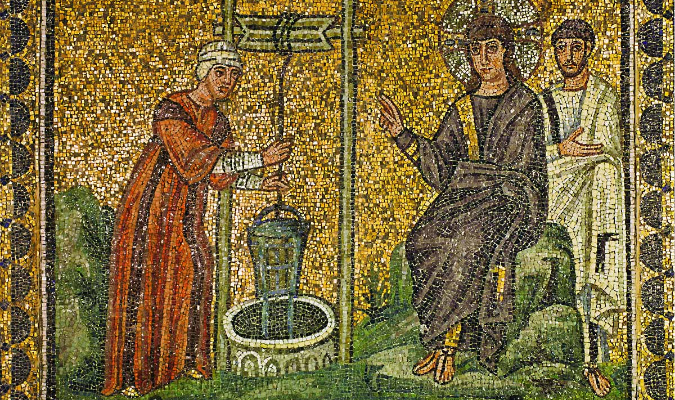
In her sermon (which can be heard here until late April), Carla had a line that cast a fresh light on one of my favorite Bible passages, the woman at the well in John 4. Noting that the woman is gathering water at an unusual time of day, Carla suggested, as most commentators do, that she had been shunned by her neighbors who come in the morning. But then she asked, "Or is it her own self-doubt?"


I'd never thought of that. Shame is a powerful force for tearing us down, but it isn't always imposed from someone else. It can come from ourselves, too. Was this woman shunned by her community or did she exile herself? What little we know of her ("You've had five husbands" v. 18) means she's been widowed or abandoned five times (women didn't have legal standing to seek divorce then). She's known a lot of heartache. I'd never considered that her heartache could be causing her to isolate herself in shame. Perhaps she tells herself, "You're unlovable. They don't want to be near you. You're such a failure."


We all carry such voices around with us; little shame demons that point to our failures (actual or perceived) and our flaws (real or not). They can be rooted in minor incidents from our childhood that scarred us deeply or from repeated behaviors that we can't seem to stop doing. They can be from things we've done, things done to us, or things we've failed to do. They show up in phrases we repeat in our heads:
  • "I'll never really belong at work/in my family/with my friends/at church because I'm imperfect/stupid/different/flawed." 
  • "I'm just not cool/interesting/funny/attractive and someone's going to figure that out."
  • "If I don't keep my life balanced perfectly, I'm going to disappoint people and they'll stop liking me."
  • "If people really knew what I was like..."
Like the woman at the well, shame can lead us to avoid people, hide part or all of ourselves, or just believe that we're not that good or worthwhile.

All of this is why I love that our order of worship in the Lutheran church always begins with confession and forgiveness. Some people look at confession as a negative thing that creates shame by forcing us to think about how bad we are, but I don't.

For me, confession is confronting the shame that I carry with me and the voices that point out my flaws and then being reminded that they don't define me; that's not who I really am.

Because when I stand at the baptismal font each week during confession and splash in the "living water" that Jesus promised the woman at the well, I'm reminded that I'm a child of God, claimed by God's promise of eternal life. My shame and faults that make me feel worthless don't get the last word because I'm someone worth dying for according to Jesus.

My true identity is found in my baptism. When shame leads me to hide away, to avoid the crowds and come to the well in the middle of the day, I can remember that God's identity for me gives me a second chance. I don't need to fear living life fully or being vulnerable because the things I may feel shamed about (by others or myself) don't have to define me. God can reconcile and redeem the points of shame into empathy, wisdom, and compassion for others.

We don't need to live in shame or hide from the crowds. We don't need to listen to the negative voices tearing us down inside. The voice of Jesus says we're forgiven, loved, and adopted as children of God. That's our true identity.

From the Gray,
Pastor Ari

"Here in my head full of shame, you pick me up and say I look like You." -Jars of Clay, "Sing"

Friday, March 17, 2017

Addressing Mental Health in the Church

A friend shared this article from the Washington Post on facebook a few months ago and I've found myself thinking a lot about it ever since. In the essay, Charlotte Donlon writes about living with bipolar disorder, her faith, and her frustration that the church rarely addresses mental illness in meaningful ways, if at all. For me the essay cuts me in a couple different ways.

First, as a pastor, I read how the author's pastor dismisses her mental anguish in conversation and unintentionally shames her in a sermon and I cringe. I cringe because on days where I feel like less than a superhero, that's what I worry I'm doing. I am in near constant fear that I will say something that shames or hurts someone without me meaning to or that I just won't have the right words to say to help. I've learned in my ministry that there are many times where the only true answer is "I don't know." But when someone comes to me with a difficult question looking for some kind of help or hope, it rarely feels like that level of theological honesty is the right answer. Chronic illness, serious childhood diseases, and sudden deaths are all things that make me want to scream "Why God?" with everyone else.

At the same time, I resonate strongly with Donlon's essay because it's my own story, too. I've lived with depression for my entire adult life and shortly before I first read this essay, I was also diagnosed with a generalized anxiety disorder. I have more family members and friends that live with mental health issues than I can count on one hand and I know they are not uncommon in the faith communities that I've served. And yet, there is still a stigma around mental health.

Many churches do awesome work around feeding programs, addiction recovery, poverty assistance, and even healthcare, but it's interesting to me how almost all those programs are directed externally. Meanwhile, internally, few churches in my experience foster an environment that normalizes things like mental health, divorce, addiction, autism, and other issues that are, in fact, normal for most people. Instead, many of us put on masks and pretend to be what we think is "normal" and think we're the only ones faking it.

I don't have any answers for fixing this, certainly not on a grand scale, but I am a big fan of Brené Brown's work that says risking vulnerability and honesty is the root of joy and wholeheartedness and I know Jesus said "the truth will set you free" (John 8:32). So I hope that being vulnerable and honest about my own struggles with mental health might start to normalize it for others.

So...

I have anxiety and depression. I'm medicated for it now and it's helped me a lot. Most of the time I'm fine, but like arthritis or diabetes, it can flare up at times and I can't function at 100% when it does. I'm not ashamed about living with anxiety and depression. In fact, sometimes I think of them as my super powers because I know they are closely connected to my drive to be my best and my creativity.

And I know I'm not alone. And if you're like me, then neither are you.

I pray this is something we can talk about more and I pray that the gift of God's grace gives us the confidence to make being normal... well...
normal.

From the Gray,
Pastor Ari

P.S. If you struggle with depression or think about hurting yourself, please get some professional help. If you can't, have a friend help you. Take it from me: things can get better.


“There’s one more thing I want to say: Our brains are sick, but that’s okay.” -twenty one pilots, “Fake You Out”


Thursday, February 23, 2017

A Single Point of Failure

"If you have a single leader, you have a single point of failure.” 

In January, my pastoral coach shared this quote through our Facebook conversation group. I’ve thought back to this quote many times since then as it speaks of the way I’ve been trying to adapt as a leader in recent years. 

Coming out of seminary, I had a bit of hero complex. Like recent graduates of almost any school, with a head full of fresh knowledge and eagerness to put it to use, I often thought I needed to provide the answers to every problem. I acted as if I needed to be involved in every decision. 

The dark side to that was I was constantly making decisions that were little more than good guesses. No one can be an expert in everything and no one has infinite attention to devote to the many things that happen in a church, but the models for leadership I’d seen in my life and my training in seminary suggested that’s what I was supposed to be. Be strong, be decisive, don’t show weakness. 

The darker side was that I was always scared of being wrong, of being revealed to be a fraud. I lived with the constant stress of believing that the well being of a congregation rested almost entirely on my shoulders and if I tripped up, the shame would surely kill me.

Thankfully, wise and loving people, humbling mistakes, and the undeserved grace I received after the mistakes, all taught me how stupid I was being. I am not called to be a savior. That’s Jesus’ job. 

In hindsight, when I push aside Jesus from his place as savior, I am sinning (one definition of sin is not acknowledging God’s proper place in your life) and “the wages of sin is death” (Romans 6:23). I was killing good ministry by wearing myself out. I was killing good ministry because I couldn’t give proper attention to everything and I don’t always have the best perspective on something. I was killing good ministry by sidelining people who were experienced and passionate about areas I wasn’t. 

Even though I would talk about delegation and sharing responsibility, I couldn’t seem to do it myself… not until my failures piled up enough to convince me I had no other options. 

Sometimes I’m a slow learner. 

But I’ve slowly learned that sharing responsibility creates for better outcomes. I’ve learned that asking questions is often more important than having answers. I’ve learned that risking the vulnerability of saying “I don’t know” leads to deeper trust. I’ve learned that being honest about myself is more faithful than being perfect. I’ve learned that mistakes create space for grace to be practiced, and where there is grace, there is God.

From the Gray,

Pastor Ari

“I’ve just returned from a war that was lost. The only foe I had was me.” -Josh Joplin Group, “Human”


(Note: This article also appeared in my church's newsletter in Spring 2017.)

Friday, July 22, 2016

Getting Uncomfortable Can Be Good

Last Christmas, my family had the opportunity to join in a tradition outside our own experience. My daughter is in a dual-language program at her school that combines students who are native speakers of both Spanish and English so they can learn from and with each other. One of her friend's family is from Mexico and they invited us to come to their Las Posadas celebration.

Las Posadas is a religious tradition for Mexican Catholics recalling the pilgrimage of Mary and Joseph to Bethlehem and their search for housing along the way. That's about all I knew when we arrived at their house for the celebration and crammed into their crowded living room. We were handed a sheet of paper full of Spanish songs and prayers and without much warning the event began. Various people took the lead with songs and prayers, a young girl and boy dressed as Mary and Joseph moved around the room at certain times, my wife and daughter jumped in easily as they are both fluent in Spanish, and it was clear that for everyone outside my family, the happenings were familiar and meaningful.

But I was lost.

I know enough Spanish to mumble my way through something written on the page and I felt honored to have been invited to what was clearly an important family event, but I spent most of the evening confused, and maybe even uncomfortable.

Thursday, March 3, 2016

Opening Our Eyes to the Well

“The angel of God called to Hagar from heaven and said to her, ‘What is the matter, Hagar? Do not be afraid; God has heard the boy crying as he lies there.’ Then God opened her eyes and she saw a well of water. So she went and filled the skin with water and gave the boy a drink.” (Genesis 21: 17, 19)

I am part of a monthly coaching group with four other pastors. The first week of every month, we join a conference call and share encouragements, insights, and ideas for strengthening ourselves and our ministries. In one of our sessions, we were asked to share a Bible passage that was important to our ministry. Several “classic” texts were mentioned before one of the pastors named the story of Hagar as her favorite.

Now, Hagar is kind of a sad story and certainly not one I’d ever considered for inspirational material. Hagar is a servant woman who is used by Abraham so he can father a child, Ishmael. Later on, after Sarah gives birth to Isaac, Hagar and Ishmael are cast off to fend for themselves in the desert. After running out of water, Ishmael is on the verge of death and Hagar cries out in sadness for her son. 

Like I said, it’s a sad story, but it’s this point in the story that my colleague named as the meaningful one for her. When Hagar cries, God hears her and then “opened her eyes and she saw a well of water” (Genesis 21:19). “The miracle,” my colleague said, “wasn’t that God created a source of water, it was that God opened Hagar’s eyes to the well that was already there.”

There are many desert places that we will confront in ministry and in our lives. It’s easy to want a miracle to get us out of those places, but big, flashy miracles are rare. Perhaps the miracles we should be looking for are like Hagar’s, where God opens our eyes to something that was already in front of us. 

I know I’ve experienced this recently as I was confronting a desert time in my life. I was overwhelmed with worry and stress and looking for a magic bullet. I didn’t find that magic bullet, but I was amazed to find the resources I had in friends and acquaintances who provided advice, references, and wisdom from their own experience. 

There are always challenges that will arise in ministry and life. As we confront them, may God open our eyes to the wells of hope that may be around us. 

In God’s Amazing Grace,

Pastor Ari

“Carry me; your love is wider than my need could ever be.” -Jars of Clay, "River Constantine"

Thursday, October 15, 2015

When God Doesn't Answer (Blog on Job, Part 2)

(This is part two of my blog on Job. You can read part one by clicking here.)

Last week, I mentioned that two great questions get raised by Job: Why has this happened to me? and Why would God allow this? In the second text assigned for reading in the lectionary this month, Job voices his pain when those questions go unanswered by God. 

In Job 23:1-17, Job cries out that God is not answering his prayers, saying, "If I go forward, he is not there; or backward, I cannot perceive him; on the left he hides, and I cannot behold him; I turn to the right, but I cannot see him" (vv. 8-9). These verses (echoed many other places in the book) capture why so many people read and study this book. 

Job asks one of the profound questions of faith: Where is God when we suffer? And why does it so often feel like God is distant in times of pain?

These are questions that I am asked all the time. They are questions that I ask all the time. 

They are questions that deserve careful examination because they are a part of everyone's lived experience. We all are afflicted at times with loss, pain, suffering, and disease. We will all likely think things can't possibly get worse only to be proven wrong. 

Because they are so universal, they are questions that have led to much spilled ink over the millennia (including the ink originally spilled to write Job) and it would be impossible to settle them in one blog post. (Job alone spends 42 chapters trying to answer these questions and still leaves them partly unanswered.) But there are a few points we can draw from the Bible in and around Job that help shape how we ask the question today.

When God Speaks, It's Rare


When we read the Bible, it seems as though God is answering prayers and saving the day left and right. God has prophets and priests and rulers hearing God's word and doing miracles all over the place. It can lead us to wonder why God has stopped speaking and acting as much today.

But if we look more closely, we see that many of the stories of the Bible the highlights in a long timeline, kind of like SportsCenter showing all the runs from a three hour baseball game in thirty seconds. In fact, there are long periods of silence from God within the Bible. The Israelites are enslaved in Egypt for generations; the period of Judges has years of suffering in between a few heroic battles; and there are four hundred years between the Old and New Testaments. 

God's silence seems to be the rule more than the exception for much of the Old Testament. Why that may be is hard to say, but it is clear that God does not speak out of burning bushes to every person in trouble, then or now. 

So does that mean that God just doesn't care? Does God ignore us most of the time? The Bible says "no," because...

When God Speaks, It's Hopeful


When God does speak in the Bible, it's often to offer comfort and hope. (God's response to Job doesn't really, but I'll get to that next week.) God makes it clear that he doesn't intend suffering for those who trust in God and promises that there will be a time when all we be right. Even if we don't experience justice or an end to suffering in this life, God's final word to us is hope.

In the Bible, God shows care for us in the midst of our suffering because God often sympathizes with us, joins us in our mourning, and cries over injustice in our world. Most importantly, we see God choose to physically enter our suffering and walk alongside us in the person of Jesus. Jesus seeks out those who suffer and answers their questions with himself. Rather than be indifferent, God promises to be present with us in this life.

But why then does it not always feel like God is with us in pain? Why does God feel silent?


When God Speaks, It's...To Voice Our Question? 


The Bible is filled with people and poems asking a version of Job's question. The Psalms are full of so-called songs of lament, crying for the God that feels distant. Perhaps the most famous of these is Psalm 22, which bears a great resemblance to the crucifixion of Jesus in the New Testament. In fact, the opening words of the psalm, "My God, my God, why have you forsaken me?" are spoken by Jesus on the cross. 

And there is the great mystery and hope of this difficult question. The wrenching cry of "Where are you?" spoken by Job and the psalmists is also spoken by God the Son in his time of suffering. And the immediate answer is silence... and death.

The meaning of that moment in history is profound. Jesus shows that God hears our suffering, God comes near us in our suffering, and God experiences our suffering to the point of despair.

There are some who will say that asking the questions that Job and the Psalmists raise is a sign of weak faith or is unfair to God. They may say that we must simply trust "God's plan" and never question God. But when Jesus cries from the cross, he validates all of us who ever sit on the ash heap with Job and ask why we're there. Without offering the answer to why there is suffering to begin with, Jesus makes it okay to keep raising the question. Even without the example of Jesus, the author of Job is clear to say that Job "did not sin with his lips" (Job 2:10), meaning all of his questions did not separate him from God. 

One of the lessons of Job is that even when we get no answers, there is no sin in asking the question. Even if we get no answers, asking the question puts us in the company of Jesus. 

From the Gray,
Pastor Ari


"Cuz I, I got a question... I got a question: Where are you?" -Jars of Clay, "Silence"

Next time: Living with Mystery...

(If you are interested in exploring the question of God's presence in suffering in more detail, I strongly recommend two books. In "Where's God When It Hurts?," Philip Yancey asks this question very directly and uses Job to explore it in depth. For a fictional approach, read "Silence" by Shusaku Endo, a classic novel about Christians persecuted in the era of feudal Japan.)


Thursday, February 12, 2015

How to Meet the Apocalypse in Style (A Throwback Post)

(In going through some old files, I stumbled upon some old blog posts and newsletter articles from my previous positions as a pastor and seminary student. While some make me groan with embarrassment, I will occasionally post a "throwback" article from the archive. Here's one I wrote back in 2011.)

A couple weeks ago, while driving through Sussex, I saw a yard sign that said the world was ending on May 21. Since this was obviously a professionally printed sign, I was curious who was behind this revelation. 

Googling the information later, I discovered that a Christian preacher and radio host in Oakland, CA named Harold Camping had “discovered” the rapture is going to happen at 6pm on Saturday, May 21 by carefully working through Biblical math equations and checking them against historical events. His conclusions have led thousands of people to quit their jobs, sell their possessions, and/or drive around the country trying to save as many souls as possible before this Saturday. 

Given that Christians do hope and pray for the return of Jesus and that we’ve seen hundreds of such predictions come and go in the past (Anyone remember Y2K? 9/9/99?), what is a proper Christian response to news like this?  My response is “nothing.”

When I say “nothing,” though, I don’t mean that we should do nothing at all. Instead, I mean to say that we should do nothing different.  Martin Luther, when asked once what he would do if he knew the world would end tomorrow, replied, “I would plant a tree today.” His response suggests that we should always live in hope of tomorrow, always work to create life, always trust that “whether we live or we die, we are the Lord’s” (Romans 14:8). 

As Christians, we live lives of hope, love, generosity toward others, and freedom from death and fear because of the actions of Jesus Christ. Why should any of that change, even if we knew for certain that the world were ending this Saturday?  

One of the trademarks of the American Evangelical movement has been a fascination with the Apocalypse and obsession with interpreting the “signs” of Revelation, Daniel, and Ezekial. Aside from the fact that Jesus himself says that “only the Father” knows when these things will happen (Matthew 24:36), my criticism of this scholarship is that it puts our energies into the wrong pursuits.  Instead of looking for meaning in the “signs” of the Bible, we should be living according to the meaning in plain words: Love God and your neighbor as yourself. Over and over, the Bible tells us that serving others is true worship to God, not figuring out a secret date.

So whether you think the world will end this Saturday, or you think this is just another bogus doomsayer, do nothing different. Live with hope, joy, and self-giving love toward others. We are the Lord’s. Those words are all the certainty that we need. Now, if you’ll excuse me, the world is ending and I need to plant a tree...

From the Gray,
Pastor Ari

“Take these chances, place them in a box until a quieter time. Lights down, you up and die.” -Dave Matthews Band, “Ants Marching”

Thursday, February 5, 2015

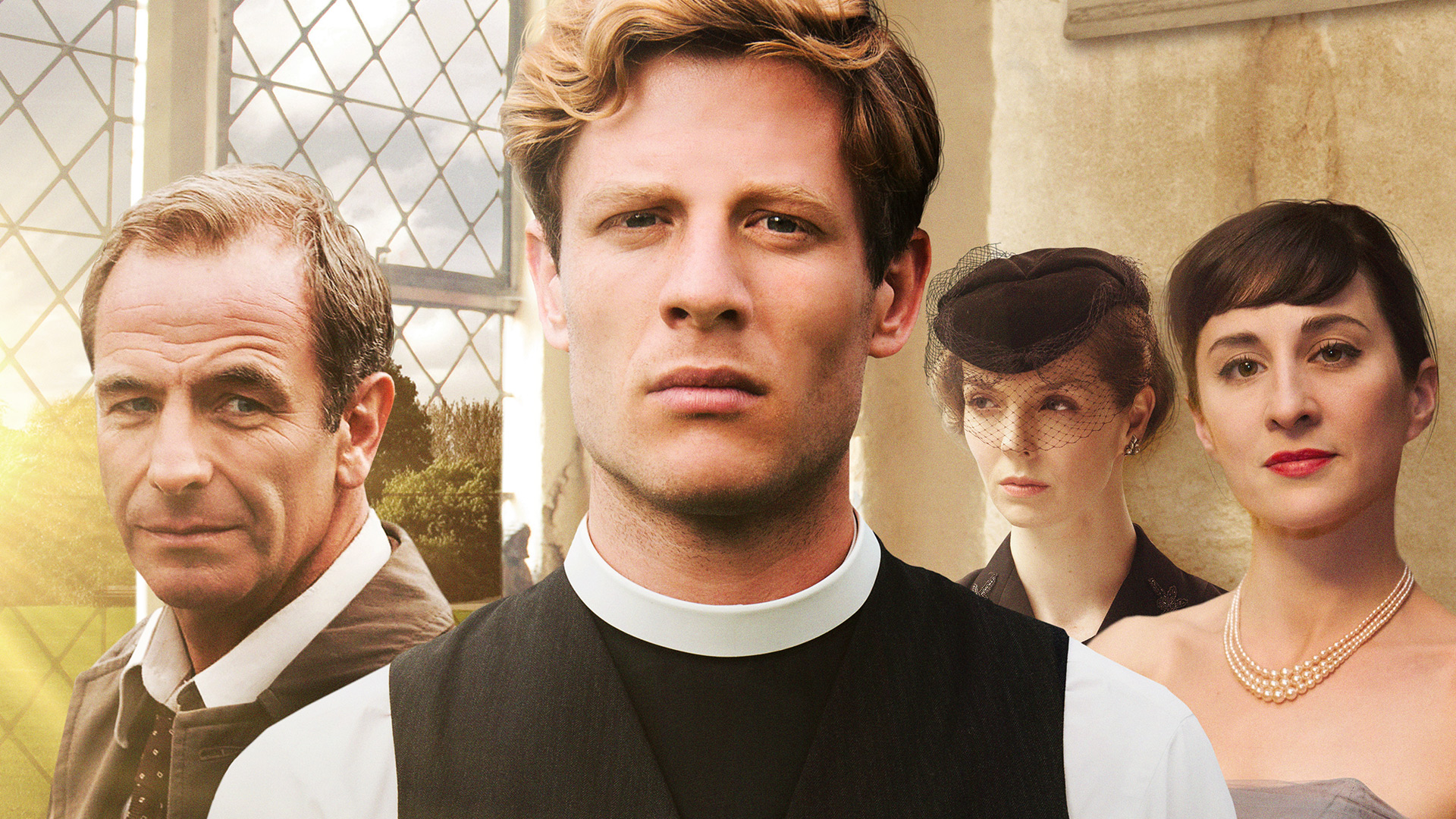
Grantchester: What a Fake Priest Reveals About Being Real Christians

A fictional character who seems real has me thinking about how much we play characters in our real life.

I recently started watching the PBS series Grantchester. I have a weakness for British dramas and mysteries and Grantchester is both. But what drew me to the show was a description I read that went something like "Sidney Chambers is a priest who loves God, jazz music, a good pub, and solving murder." When I read the description to my wife, she said, "It sounds like you, except for the solving murder part." (My half-joking response: "Maybe one day...")

What my wife said, however, was exactly what drew me to the show. "It sounds like you..." I've mentioned before in my blog my frustration with Hollywood typically portraying clergy as dangerous fanatics or clueless goodie-goodies. (And always men! Dear Hollywood: Women can be clergy, too!) But Grantchester was describing a priest that talks and acts like a real person. Here is a priest that actually sounds like me and most of the pastors I know.

Sidney Chambers goes to pubs, parties, and picnics. He does manual labor, has conversations where he is both compassionate and uncertain, has a complicated love life, and struggles with writing his sermons. In one conversation in episode three, he shares with a priest in training that "this job is difficult" because "most things aren't black and white; a lot of life is gray areas." While it's not a perfect show or a perfect reflection of my experiences as a pastor, it is the closest portrayal of a real life clergyperson I can think of seeing on screen. They are at least striving for authenticity.

That issue of authenticity in a fictional priest has got me thinking about authenticity in my real life job because as much as I dislike the stereotypes of pastors on tv, I know many stereotypes have some small grain of truth in them. Perhaps pastors are portrayed as defenders of spiritual certainty and moral purity because that's how we treat our jobs.

I know I often feel pressure (From myself? Culture? The Church?) to have a simple, clear answer to any situation and I can be afraid of appearing like I don't know for sure. After all, I'm supposed to be the authority on God, right? If I don't have faith all figured out, does that make me an imposter or a failure?

Despite my fears, however, I've often found that the richest and deepest conversations I've had with people have often been from sermons or Bible studies where I've risked saying, "This is hard for me to understand. I wrestle with making this fit my own life." (The most read blog article I've ever written was one where I shared my discomfort with the story of God asking Abraham to sacrifice his son.) In other words, when I've been more authentic myself, it's given permission to others to be more authentic in their faith.

And that permission giving is important because I think all of us have something in our lives where we fear authenticity. It may be related to our social group, our faith, our parenting, or our job, but I'm guessing there's at least one spot in our lives where we're afraid to do or say anything that might show we "don't know" or "don't fit in." Instead, we play stereotyped versions of ourselves, hoping we won't reveal we are imposters.

As Christians, though, we are called to be about the truth. Jesus says, "Let your 'yes' be 'yes' and your 'no' be 'no'" (Matt. 5:37) and promises "the truth will set you free" (John 8:32). God's truth doesn't set us free so we can become stereotypes, but so we can grow in the image of God. And growth is much stronger when we are able to admit the places where we need help and make ourselves vulnerable enough to create relationships that can grow with us.

I am a pastor that loves God, music, a good pub, and solving murder mysteries (on tv, at least). I don't have a perfect answer for every faith question or Bible story, but I pray that being my authentic self and inviting others to do the same will create a community where God's truth is revealed to us all.

From the Gray,
Pastor Ari

(As a side note, I don't think authenticity is the same as "letting it all hang out." I've heard of pastors swearing in the pulpit or oversharing personal details to the point of making people uncomfortable. The authenticity I'm thinking about isn't self-serving ["Here I am! Deal with it!"]; instead it creates a space where you and I can be imperfect together.)


“I stole my personality from an anonymous source.” -Hockey, “Song Away”


Thursday, June 12, 2014

Healthy Fear

One of the intriguing aspects of the Bible (at least to me) is the repeated command to "fear the Lord." It's an idea that appears at least one hundred times in places like Psalm 2:11 ("Serve the Lord with fear") or Proverbs 9:10 ("Fear of the Lord is the beginning of wisdom").

It's something I've been asked about many times over the years from kids and adults: "If God loves me, why should I be afraid?" And over the years, I've given pretty standard theological answers about being in awe of God's majesty and God's right to revoke mercy at anytime and blah blah blah...

Because while I don't think my answers were wrong, they left me unsatisfied and I've usually felt there has to be a better explanation to use. Then a couple months ago, I thought of one while listening to someone else preaching (on a completely unrelated topic).

I thought about the fact that we consider cold feet on a wedding day completely normal. Is it because we think the beloved will suddenly turn into a monster and eat us? No. It’s because we recognize the enormity of the moment. We recognize that this event/relationship/emotion will change us; we recognize that we can’t predict what this will mean for our lives.

Because I love/am loved, I may do things or live in ways I didn't think I would or could or should. Because I love/am loved, I must consider the needs and wishes of my beloved and not just my own. Because I love/am loved, I am entrusting a huge part of myself to someone I can't control, making myself vulnerable, and risking being hurt. And that's scary. Love is scary.

And we think it's normal to feel fear in that place.

God, God's love, and the relationship God offers to us are no different. They will change us. We cannot predict what God will mean for our lives or where faith may lead us. It is an enormous moment whenever we grasp the full breadth of God's intention for us. Of course we would be afraid. It would be foolish not to be afraid in that moment.

*     *     *

One of the best pieces of advice I received from someone in my preaching education was that the biochemical process in the brain for fear and excitement are almost identical. So when you feel anxious about public speaking, tell yourself, "I'm not scared; I'm excited to talk to these people." It repurposes the adrenaline to fuel you instead of feeding anxiety. (It has been helpful for me before many a sermon.) Sometimes I've even used this to help calm grooms and brides before a wedding.

At its best, I think that is what the "fear of God" is meant to do. It's fear that doesn't cripple or hinder us (that kind of fear is trouble), but instead it feeds anticipation and fuels us to go deeper in our relationship to God. It's the feeling of standing at the altar, overwhelmed at what is happening, but also giddy to see what's next. 

To fear God doesn't mean someone doesn't understand God's love for her, but just the opposite. God is big. God will change us. God will make us vulnerable and out of our own control. So be afraid... and be excited. 


“Faith makes everybody scared. It's the unknown, the don't know, that keeps me hanging on.” -Lifehouse, "Unknown"