Showing posts with label learning. Show all posts

Monday, December 26, 2022

Learn the Story: What the Old Testament Teaches About Jesus

Artwork by Aase Mattson
In September through November, I gave a sermon series I called “Learn the Story” that was based on two main ideas. First, the Bible is really one story told over many books, authors, and years. Second, that story points to and is centered on Jesus, our God made flesh. 

I was motivated to preach this series because of how often I encounter the suggestion that the Old Testament is, well, “old” and unimportant, or that it has little to do with the New Testament, or that “the God of the Old Testament” is not the "God of the New Testament." The more I personally study scripture and Christian theology, I find these ideas to be false and often dangerous. 

For those who couldn’t listen to all the sermons, or anyone who wants a written reference point, here is a summary of my ten sermons from “Learn the Story.” (All the sermons can be viewed in the worship services on our YouTube Channel starting on September 11, 2022.)

1. Made in God’s Image (Genesis 1:24-2:3 and Mark 12:13-17)

  • Big Idea: When humans are made in God’s image, we are created to be representative of who God is to the world. When we are fully human, we remind anyone who sees us of what God is like. Language in the creation story suggests we should see all of the earth as God’s temple and we are the priests who manage proper worship. 
  • Jesus Connection: Jesus, being both fully God and fully human, is the most perfect image of God we have ever known. A huge part of his mission was to restore the proper relationship between us and God and us and creation so that “Your kingdom come…on earth as it is in heaven.”

2. Rejecting God’s Image (Genesis 1:1-13, 19-23 and Mark 7:1-23)

  • Big Idea: Sin (with a capital S) isn’t a broken rule, it’s a broken relationship. Sin comes into the world when we reject God’s image for our own. We prefer to seize control of our lives and don’t trust God to truly be good. 
  • Jesus Connection: After losing “paradise” because of sin, God goes with Adam and Eve into the unknown. Jesus meets us in our unknown and dark places and even when we try to put God to death on the cross, Jesus returns to save us from ourselves and restore our lost relationship. 


3. Abraham, Sarah, and the Forever Promise (Genesis 12:1-8 and Luke 1:67-79)

  • Big Idea: God makes a promise to one faithful family, Abraham and Sarah, that they will become a great “nation” or “gōi” in Hebrew. But God’s timeline is not always ours. It takes 25 years for Sarah to give birth and hundreds of years for the full promise to arrive. And the promise is for all because “gōi” is usually the word that refers to foreign people, not Jews alone. 
  • Jesus Connection: Jesus is the fulfillment of the promise to Abraham and Sarah. Through Jesus’ death and resurrection, all of humanity is invited into the family of Abraham and becomes part of the promise made forever. 


4. Blessed and Limping: Jacob (Genesis 32:9-12, 22-31 and Luke 5:27-32)

  • Big Idea: Jacob, Abraham’s grandson, has a checkered past of lying and cheating to get what he wants. It comes to a head when God shows up to wrestle with him in the night. In the morning, Jacob is wounded by God but blessed with a new name and destiny: Israel, “wrestles with God.” We will likely wrestle and struggle with God in our lives, but we can emerge blessed and limping.
  • Jesus Connection: Jesus specifically seeks out the “sinners” like Jacob and blesses them. His goal is to transform our shortcomings into blessings. 


5. God the Liberator (Exodus 3:1-14 and Luke 4:16-21)

  • Big Idea: This may be the most important story we have outside of the Gospels because it shows us God’s heart. God sides with the oppressed and hurting, and seeks to liberate them. We are meant to “image” God, but sin breaks that and creates a cycle of violence and oppression. God seeks to free the enslaved from their pain and free the slavers from their sin. 
  • Jesus Connection: What God does in Exodus, Jesus does at Easter. When we cannot free ourselves, Jesus leads us through the sea of baptism, drowns our oppressors in the water, and we come out as God’s freed people. 


6. Becoming God’s People: Commandments and Wilderness (Exodus 19:1-8 and Matthew 5:13-20)

  • Big Idea: God seeks for the Israelites to be “a priestly kingdom and a holy nation.” The Commandments are often seen simply as a list of rules, but God intends for them to tell us what a priestly and holy people look like, what it looks like to bear God’s image. 
  • Jesus Connection: Jesus comes to “fulfill the law,” meaning to help us know it’s proper place. We love one another because we have been loved, not because we expect a reward. 


7. What is a Messiah?: Saul, David, and the Kings (1 Samuel 10:17-25 and Mark 8:27-37)

  • Big Idea: “Messiah,” or “Christ” in Greek, was not a title unique to Jesus. Messiahs in the Old Testament were usually kings who rescued God’s people from their enemies, established a kingdom for them, and restored proper worship of God (like King David). They were military and political heroes and that’s what people expected Jesus to be. 
  • Jesus Connection: Jesus is the True Messiah who turns our assumptions on their heads. He rescues us from the enemies of Sin and Death, establishes the Kingdom of God that has no borders or end, and restores us to worship God as image bearers. 


8. When Everything Falls Apart: The Exile to Babylon (Jeremiah 29:1, 4-14 and John 13:33-35)

  • Big Idea: When Jerusalem is destroyed and God’s people sent to exile in Babylon, many question where God is and what they should do since everything they’ve known is gone. God’s answer is to live with hope, act with love, and create peace. No matter the circumstances we should seek that same goal. 
  • Jesus Connection: Jesus one time says that the greatest commandments are to “Love God and love your neighbor as yourself.” In times of crucifixion and times of resurrection, we are called to do the same things, just as the exiled Jews were.


9. How to Speak to God: The Psalms (Psalm 13, Psalm 23, and Matthew 26:36-44)

  • Big Idea: The Psalms are my favorite book because of their raw honesty. They include songs and prayers that are angry, confused, joyous, hopeless, and everything in between. Instead of “dressing up” or wearing a mask to come before God, we can be honest with our thoughts and emotions. We sometimes limit faith to what we do, but more importantly it’s about what we are: God’s beloved children.
  • Jesus Connection: Jesus teaches us to pray to God as “Our Father,” because that’s the relationship God wants with us. And even Jesus prays to God with brutal honesty: “Father take this cup from me. Yet not what I will but your will be done.”


10. Don’t You Remember?: The Prophets (Micah 6:1-8 and Matthew 23:23-28)

  • Big Idea: The prophets can make God sound like a grumpy landlord — “Don’t break the rules or I’ll evict you!” — but their words are more like the concerned parent who can see their child going down the wrong path: “If you keeping doing that, there are going to be bad consequences, so please don’t.” Micah summarizes many of the themes from the Old Testament in three simple commands: “Do justice, love kindness, walk humbly with your God.”
  • Jesus Connection: What Micah commands is what Jesus does — for us! He brings justice for the suffering in his ministry and for all at the cross, he shows kindness and compassion to all, and he walks humbly with us, teaching us the way of God’s love.


The Big Story’s Big Idea: God created this world and us to be a physical living-out of everything that is good about God. Out of fear and our self-centered nature, we reject God’s image and choose to pursue our own images or idols. God spends the rest of time seeking to call us home and show us that everything we are seeking — liberation, purpose, community, security, hope, peace, justice, acceptance — are found in relationship to God. Jesus is the ultimate example of God’s way, but more importantly is the Messiah who rescues us from ourselves and restores us as God’s image bearers.  


From the Gray,

Pastor Ari


“I’m still learning things I ought to know by now.” -Vertical Horizon, "You’re a God”


Friday, September 3, 2021

Cutting Through the Media Noise to Listen for God

Photo by Thiébaud Faix 
on 
Unsplash

The world is very loud and angry today. We are bombarded with news about diseases, natural disasters, political arguments, economic roller coasters, and more. It often feels like it's not shared so much as shouted at us by people who can't tell the difference between opinions and facts. And that doesn't get into the messages from advertising, movies, and television programs. 

It's no wonder that I hear from many who just want to tune out or ignore the news or say they don't know what to believe or trust anymore. I feel the same way at times. 

In an interview last year, I heard a recommendation from Kaitlyn Schiess that I have found helpful ever since. She was speaking about her book, "The Liturgy of Politics: Spiritual Formation for the Sake of Our Neighbor," on the Holy Post Podcast and suggested using two simple questions to cut through the noise of news (especially political).

-What is this telling me to value? -What is it telling me to fear? 

I'd suggest the obvious third question is: How do those answers line up with my values? Better yet, How do they line up with Biblical values?

I know we could start a long debate about what "Biblical values" means, but I think we can rely on the plain words of a few classic verses as common ground:

  • Paul lists some core values in Galatians that he calls "the fruits of the Spirit": love, joy, peace, patience, kindness, generosity, faithfulness, gentleness, and self-control. 
    • Do the shows you watch celebrate and encourage these values?
  • Jesus names a list of people who are "blessed" at the start of the Sermon on the Mount (Matthew 5:1-12): those who are meek... merciful... pure in heart... peacemakers... those who hunger and thirst for righteousness... 
    • Is this the type of person you are inspired to be by the media you consume?
  • In 1 Corinthians 13, Paul names love as "the greatest" practice of Christians and shares what love does NOT look like: "love is not envious or boastful or arrogant or rude. It does not insist on its own way; it is not irritable or resentful; it does not rejoice in wrongdoing, but rejoices in the truth." 
    • Do the voices you listen to promote love or the opposites that Paul names?
These questions aren't meant to shame you for the media you consume. And they are not to say that any news or program that doesn't fit this model is "evil." These are questions to help us critique what we are hearing and hear it through a Christian lens. 

I'm not expecting any of us to be taught Godly values by watching the news. That's not their job! Their job is to share information and get viewers to watch. The answer is not to never consume news or media, but to consume it wisely. 

As Christians, we are called to reflect the goodness and wisdom of God to the world around us, to be part of the renewal of creation started in Jesus' death and resurrection. We should shape the world more than we're shaped by it. 

What are you learning to value? What are you learning to fear? How close is that to what God values in the world? Hopefully the right questions can lead us towards the answers we need.

From the Gray,

Pastor Ari

“Let me learn from where I have been; keep my eyes to serve and my hands to learn.” -Mumford and Sons, “Below My Feet”


Thursday, June 4, 2020

Faith Like Jazz

I love jazz music. One of my favorite albums (of any kind of music) is Miles Davis' "Kind of Blue."

I will also be quick to say that I don't totally get jazz. I know there are a lot of interesting things going on in jazz that trained musicians can pick up on and dissect. Some jazz gets really experimental and ... unique. That's not the jazz I love.

Instead, I love the Miles David/John Coltrane style of jazz. The kind of jazz you imagine in a smoky bar with a three- or four-piece group providing the background to conversations between people in fedoras and boas. (Which is where I've heard some of the best jazz in my life.)

What I love about jazz is the improvisation. I love listening to the way the band will take a riff and play around with it for several measures, trying different things each time. Or the way one of the instruments will go on a solo, pouring out sounds that are more like emotions than notes while the others maintain a regular rhythm to hold her/him on a path. In jazz there is both creativity and freedom, and there is a kind of restraint because all the parts are working together toward a common goal.

I love jazz.

I also love Jesus. And I think following Jesus should be a lot like jazz.

When I was growing up, a lot of Christian teaching made me think there was a specific way to follow Jesus. There was a set of rules to follow and a certain way to act and dress and if you followed all of them, you were Christian. If you didn't, well, thanks for playing.

In my music analogy, it would be like saying, "To follow Jesus, you need to play the piano and play 'Moonlight Sonata' perfectly."

But I think that's too narrow a view. Especially today. Life rarely follows a neat, clear path where every action has a predictable reaction. And every person in the church doesn't have the same gifts or passions or reasons for being in church. Instead, I think living a life of faith is like playing jazz music.

You have a group (church or fellow Christians) who have different instruments (talents) and you're all working together to make a beautiful piece of music (bring God's life to earth). But you're also improvising, repeating common themes (love, forgiveness, mercy) in different ways to create new sounds and ideas. The members are doing their own thing, but working together, being creative and free, but following certain patterns that are familiar to all participants.

This is much more like faith as I've experienced it than "Here's a piece of music. Memorize it." It's also what the church needs to be today.

We are in a time when technology and globalism are changing things constantly. We are in a time where we live with many differences in generations, ethnicity, gender identity, and more, even within one neighborhood.

In order to adapt, to love everyone, we need to improvise. We need to play around with familiar riffs in new ways. We need to work with the other members of the band to avoid chaos. We need to have a sense of playfulness and imagination, following the path of grace and love, but creating something new on the way.

This is why the church has been so different over the ages in a variety of cultures and eras, but still grounded in the same truths.

Faith is like jazz. Follow along.

From the Gray,
Pastor Ari

"Oh my life will be here waiting for you, my love, to find your way back home to me." -Sophie Milman, "Back Home to Me"


Tuesday, February 25, 2020

What to Do When We Don’t Know What to Do

(Note: This was first written for my church's newsletter in March 2020.)

In January, I started participating in a program supported by our local synod called the Adaptive Leadership Academy. The goal of the academy over the coming year is to develop leadership skills for situations where there isn’t an easy solution--or perhaps there isn’t a solution at all. 


I’m still early in the program and haven’t finished all of my homework for the first month, but the class has got me thinking about the leadership lessons I’ve learned from experience, wiser people, and a whole lot of trial and error. They have proven useful not just for leadership, but for life and faith growth as well. I share them here hoping they can be useful for someone else as they have for me. 


Be Kind -- Give the benefit of the doubt. You catch more flies with honey. Do unto others as you would have them do to you. However you name it, I’ve learned that treating people with kindness and dignity is the best way to move things forward.


See Every Person As Someone Jesus Loves -- I’ve mentioned this in at least one sermon, but a woman in Bible study once told me she tries to look at every person in her day and say, “This is someone Jesus loves.” I try to do this and it always makes a difference. Looking at people through the eyes of Jesus helps me to have more patience and grace and see possible actions I wouldn’t otherwise.


Participation Is More Important Than Perfection -- I can get stuck sometimes not doing something because I don’t have the perfect answer or don’t think I can do the work as well as others. I’ve learned it is usually better to just do my best with a few mistakes than to do nothing at all. People are often forgiving and are more likely to remember the effort than the mistakes. 


When in Doubt, Ask -- I can have a bad habit of not asking questions because I’m afraid of looking like I don’t know. Or I can assume I know what someone wants or needs when I don’t. I’m slowly learning to ask questions when I don’t understand so I can do what is needed and do it right the first time. 

Don't Get Defensive; Get Curious -- When there is disagreement, our natural tendency is to get defensive and prove our point, but responding with curiosity can build trust and solutions faster. I try saying, "I'm having a hard time understanding your perspective. Can you help me understand?" or "This seems really important to you. Why is that?" As a friend and colleague once said, "We need to think of curiosity as a spiritual discipline." (She's one of those wiser-than-me people.)


What Does Love Look Like in This Situation? -- Sometimes it’s being active and sometimes it’s just being quiet and listening. Asking this question when I’m not sure what to do helps me put God’s priorities in the picture and focus my options.


There are many times in life where we may not know what to do or have a perfect answer. Those moments can be scary, but I’ve found that if I work through those moments with practices like these, the destination is better than when I don’t.

Move forward. God is with you.


From the Gray,

Pastor Ari

“All these thoughts are an ocean that I’m drowning in.” -Judah & the Lion, “Over My Head”

Thursday, February 20, 2020

5 Old Testament Stories Every Christian Should Know

I recently ended a sermon series at my church that I called, "5 Old Testament Stories Every Christian Should Know." (You can listen to some of them here until March.) It was an idea that grew out of a lot of Bible studies, pastoral conversations, and personal study from the past few years. I found that I was making more connections to the Old Testament, but many people didn't have a good understanding of the stories or assumed they were unimportant because they weren't in the New Testament.

(To be clear, I don't fault anyone for not knowing the Old Testament well. Many Christians, and especially ELCA Lutherans, have either deemphasized it or just focused on the violent portions.)

The five stories that I find myself using the most when I preach or teach are Creation, Abraham and Sarah, the Exodus, King David, and the Exile. Having completed the preaching series, I thought I should summarize it here for those who couldn't attend all or any of it and to have brief summary for future reference. As I mentioned in my sermons, I could not to full justice to these stories in a 15-minute sermon, so my focus was on three questions: What happened? How does it relate to Jesus and the New Testament? and Why does it matter to us today?

I was also challenged by a member of my congregation to sum up every sermon in one word to make it easy to remember. Having hopefully met his challenge, I will use those here as well.

Creation
Word: Good
When the story of creation gets discussed, it often centers around the creation-evolution debate. I think that's a red herring. The more important part of the story is that God calls this world "good," or "tōv" in Hebrew. This world is meant as a blessing for us and for all life in it. It isn't inherently evil or corrupted (which goes against some Christian denominations). To the degree it is corrupted, it's because of us. Humans reject God's good order and plan and instead shape the world in our image. Out of alignment with God, things often go badly. But as we see in this story, God creates order out of chaos. Jesus puts us back in alignment with God and orders our chaos (or sin) to become a blessing again. And it is good.

Abraham and Sarah
Word: Promise
Abraham and Sarah are given an unbelievable promise from God: follow me and I will give you a great family and bless all people through you. They do follow God, but they don't always do it well. In fact, they make some big mistakes along the way. However, God never breaks the promise. Even when the following generations also prove to be deeply and tragically human, God remains faithful and continues to renew the promise. Abraham becomes the spiritual ancestor of three world religions --Judaism, Christianity, and Islam-- and in Jesus, God fulfills the promise to bless all people, offering life to everyone, not just Abraham's blood relatives. When God makes a promise, God keeps a promise.

The Exodus
Word: Liberation
When God calls Moses to become a liberator, God says, "I know their sufferings, and I have come down to deliver them" (Exodus 4:7-8). That God sides with the Israelites, who are not powerful or important, but are oppressed and enslaved, gives us an important insight into God's character. God is keeping the promise to Abraham, but also creating a precedent of caring for the weak and freeing those who are oppressed. This God of compassion repeats this pattern throughout the Bible, especially in the person of Jesus, who saves us from the oppression of sin, drowns our spiritual enemies in baptism, and brings us into a new life where we can be God's people again. Whenever we're trapped, God works to free us.

King David
Word: Messiah
The Sunday I was scheduled to preach on David, I had to stay home sick. (Boo.) Pastor Vivian Thomas-Breitfeld did a great job filling in and naming how we are called to be tabernacles to carry God into the world like the tent of God in David's age. She also lifted up how David was a flawed king and person, but repented and was loved by God. My intent for the sermon was to name David's flaws as a king, but also how his example creates a flawed idea for those in Jesus' day and our own. One of the titles David is given is "messiah," which is not a unique title to Jesus. It literally means "anointed" and referred to someone chosen by God to defeat the enemies of God's people, build a holy kingdom, and rule with justice. David does this and becomes the example people expect from a messiah, but Jesus does it in a very different way. People expected the Messiah to defeat Rome, restore Jerusalem, and rule as king of Judea, and when Jesus refuses, he angers and confuses many. But Jesus does defeat the true enemies of God's people (sin and death), he builds a holy kingdom (a new reality built on resurrection and mercy for all people), and rules with justice as the true leader of this world. His time as messiah wasn't limited but is for all people in all time.

The Exile
Word: Homecoming
The Exile is a sad and complicated story, but it has its roots in the creation story: when humans reject God's good order, there are consequences. This time the consequence of ignoring injustice and putting their trust in wealth and military might means being crushed by Babylon and dragged off into mass imprisonment for 70 years. But God tells them before and during that time, "I will not forget you or abandon you." And after it is over, God brings them home where they belong. This mirrors the ministry of Jesus, who says we are exiled by our sin and separated from God as a consequence, but God will not forget or abandon us. Jesus comes to find us in exile and bring us home. There is no place we can go, physically or spiritually, that God will not come looking for us.

I love these stories because they aren't old stories, they are about a God who is still caring for people. They are our stories. And they are still being told.

From the Gray,
Pastor Ari


“Remember how it felt before. We still have a lot to live for.” -The Rescues, “We Are Not Alone”

Thursday, November 7, 2019

The Thing You Don't Know You're Building


Photo by Victória Kubiaki on Unsplash
"For where your treasure is, there your heart will be also." -Matthew 6:21

“You become like what you worship.” -N.T. Wright, Paul and the Faithfulness of God

"There are two wolves fighting inside all of us. The first one is evil, the second one is good... Which wolf will win? The one you feed." -Unknown (attributed to Native American teaching)

"We are forms of all the things that we love. Do you know what you are?" -Jars of Clay, "Good Monsters"

Tuesday, June 25, 2019

Some Good News Out of Washington, D.C.

On June 15-22, six youth from my church travelled with another chaperone and myself to Washington, D.C. to work with CSM (www.CSM.org) learning about urban poverty and God’s heart for the city. During the week we served at six different ministries and spent time conversing with the homeless and other residents of the city. There are dozens of stories we have from our time there that we will share with our congregation, but in the immediate aftermath, here are a few ideas we ended up discussing again and again.

Unlearning Distance -- This was CSM’s theme for the summer, based on 2 Corinthians 5:17-21. The passage includes the words we have on our bulletin every week -- “God reconciled us to himself in Christ Jesus and has given us the ministry of reconciliation” -- and we discussed how things like wealth, ethnicity, gender, and politics create divisions in our society, but God’s desire is to break down the barriers between us and build connections. In one example, we sat and talked with a homeless man in a park for an hour and a half in a conversation many kids named as one of their favorite parts of the trip. The lesson: When we break down barriers, we often find the distance is not as great as we thought.

Give Dignity, Not Just Food -- One of the stories that stuck with our students was of a CSM director who stopped to talk with a man asking for change outside a store. When he did, the man started crying and shared he was the first person all day to even acknowledge he was there. We experienced the same in people who were just as grateful for company or a smile as they were for food or clothing. One student summed up the lesson by saying, “I learned giving someone dignity is more important than giving them food.”

Start Small -- At least two of the ministries we served with didn’t start with a plan to become what they are today, or even to be a regular ministry at all. They started when a homeless man asked for a cup of coffee and when someone tried to find furniture for a neighbor. Today they are helping hundreds of thousands of people in the D.C. area. The lesson: Not everything has to be planned out in advance or start on a large scale; offer love when you can, as you can and trust the Holy Spirit to do something with it. 

These simple lessons are probably not new to many of us, but they are often forgotten in our daily activities or the rush of life, but they are profound and powerful. 2 Corinthians 5 also says that “we are ambassadors for Christ” in our lives and simple lessons like these give power to that work. 

Standing in the Gray,
Pastor Ari

“I’m an apostrophe. I’m just a symbol to remind you that there’s more to see.” -Imagine Dragons, “Whatever It Takes”

Thursday, February 23, 2017

A Single Point of Failure

"If you have a single leader, you have a single point of failure.” 

In January, my pastoral coach shared this quote through our Facebook conversation group. I’ve thought back to this quote many times since then as it speaks of the way I’ve been trying to adapt as a leader in recent years. 

Coming out of seminary, I had a bit of hero complex. Like recent graduates of almost any school, with a head full of fresh knowledge and eagerness to put it to use, I often thought I needed to provide the answers to every problem. I acted as if I needed to be involved in every decision. 

The dark side to that was I was constantly making decisions that were little more than good guesses. No one can be an expert in everything and no one has infinite attention to devote to the many things that happen in a church, but the models for leadership I’d seen in my life and my training in seminary suggested that’s what I was supposed to be. Be strong, be decisive, don’t show weakness. 

The darker side was that I was always scared of being wrong, of being revealed to be a fraud. I lived with the constant stress of believing that the well being of a congregation rested almost entirely on my shoulders and if I tripped up, the shame would surely kill me.

Thankfully, wise and loving people, humbling mistakes, and the undeserved grace I received after the mistakes, all taught me how stupid I was being. I am not called to be a savior. That’s Jesus’ job. 

In hindsight, when I push aside Jesus from his place as savior, I am sinning (one definition of sin is not acknowledging God’s proper place in your life) and “the wages of sin is death” (Romans 6:23). I was killing good ministry by wearing myself out. I was killing good ministry because I couldn’t give proper attention to everything and I don’t always have the best perspective on something. I was killing good ministry by sidelining people who were experienced and passionate about areas I wasn’t. 

Even though I would talk about delegation and sharing responsibility, I couldn’t seem to do it myself… not until my failures piled up enough to convince me I had no other options. 

Sometimes I’m a slow learner. 

But I’ve slowly learned that sharing responsibility creates for better outcomes. I’ve learned that asking questions is often more important than having answers. I’ve learned that risking the vulnerability of saying “I don’t know” leads to deeper trust. I’ve learned that being honest about myself is more faithful than being perfect. I’ve learned that mistakes create space for grace to be practiced, and where there is grace, there is God.

From the Gray,

Pastor Ari

“I’ve just returned from a war that was lost. The only foe I had was me.” -Josh Joplin Group, “Human”


(Note: This article also appeared in my church's newsletter in Spring 2017.)

Friday, July 22, 2016

Getting Uncomfortable Can Be Good

Last Christmas, my family had the opportunity to join in a tradition outside our own experience. My daughter is in a dual-language program at her school that combines students who are native speakers of both Spanish and English so they can learn from and with each other. One of her friend's family is from Mexico and they invited us to come to their Las Posadas celebration.

Las Posadas is a religious tradition for Mexican Catholics recalling the pilgrimage of Mary and Joseph to Bethlehem and their search for housing along the way. That's about all I knew when we arrived at their house for the celebration and crammed into their crowded living room. We were handed a sheet of paper full of Spanish songs and prayers and without much warning the event began. Various people took the lead with songs and prayers, a young girl and boy dressed as Mary and Joseph moved around the room at certain times, my wife and daughter jumped in easily as they are both fluent in Spanish, and it was clear that for everyone outside my family, the happenings were familiar and meaningful.

But I was lost.

I know enough Spanish to mumble my way through something written on the page and I felt honored to have been invited to what was clearly an important family event, but I spent most of the evening confused, and maybe even uncomfortable.

Thursday, October 1, 2015

The Bible as Story

The Bible is a central thing to Christianity. We read from it every week in worship. We speak about it in sermons and quote from it in our songs and prayers. Most denominations encourage individuals to have their own copy and read it regularly. And yet I often find that in conversation and study with people, many are still asking a very basic question: What is the Bible anyway? What kind of book is this?

Many people think of the Bible as a rule book that contains God’s commands for us to follow. Certainly there are “rules” or laws in the Bible (like Leviticus, Proverbs, and James), but there are huge sections of the Bible that aren’t. Some might call it a history book. Again, parts of it are history, but there is also poetry, letters, and symbolic books (like Revelation). Some like to think of it as a book of advice for living, but as Christians we believe that God is wanting to give us eternal life, not just advice. Some call it scary or confusing and they avoid reading it at all, but hiding from it doesn’t help us grow as people of God.

As I've read, studied, and taught this great book, I’m going to propose a different image that I've come to appreciate. I think the Bible is a storybook. 

Now before you go thinking that I’m calling this holy text a children’s book, let me explain what I mean by “story.” When I use the word “story,” I don’t mean something made up. Far from it. Stories are the narratives that shape our identity and tell us who we are. They are core to who we are as individuals and communities. Let me give you two examples.

*When I was growing up, I heard a lot of stories about the ministers in my family history. One was a missionary, two served in the Upper Midwest, and one taught at seminary. Hearing about their work gave me the sense as a young person that our family answers God’s call when it comes, we are proud to be Lutheran, and we value education. Those ideas shaped how I understood myself and my family and who I’ve become.

*As Americans, we tell stories about how we conquer adversity. From the Revolution to the Depression to Pearl Harbor, whenever America has struggled or been threatened, we pull together, work hard, fight back, and almost always win. Because we tell these stories, we believe we are a great country and that we can do anything. Those beliefs then shape our actions as a people.

The Bible tells us these kinds of stories. The stories of God’s people throughout time. Stories that shape who we are as God’s people today. They tell us the truth of how people have experienced God in their lives, how God has been active in our world, and how others have tried to describe God. Since we believe that God continues to reach out to us and be active in our world, these stories define for us who we are and how we fit into God’s continuing story of loving our world. 


Therefore, the Bible's stories are also our story because we continue to have many of the same experiences that God’s people did long ago. In the song "Cover to Cover," singer Wes King puts it this way: “I’ve stood strong like Daniel; I’ve fallen like David; I’ve wandered in the desert like the Israelites; I’ve denied You like Peter: I’ve struggled like Paul; run from You like Jonah, but You loved me through it all.” When we see ourselves as part of these stories, they take new relevance to our own lives in a way that just rules or advice cannot. They shape our actions and purpose. Open the Bible. Join God’s story.

From the Gray,
Pastor Ari

"The more I read, the more I find, the more I have uncovered stories just like mine." -Wes King, "Cover to Cover"

(A version of this post first appeared in my church's newsletter in 2012. I decided to repost it as I've been reading "Shaped by the Story" by Michael Novelli, which has a similar thesis.)

Thursday, September 3, 2015

Stories That Matter

(This post was first written for my church's fall newsletter.) 

The year after I graduated college, I volunteered with my church’s youth group. Sometime around midyear, I was asked to share my testimony with the students. 

At first, I was flattered to have the chance to say something to them, but as I thought about it, I started to worry. What did I really have to share with them? I didn’t have a dramatic conversion story or miracle happen to me. I never had a major crisis of faith or heavens-ripped-open moment. I was born and raised a Lutheran and had always been active in church. In my mind, my testimony was like describing vanilla ice cream.

After some thought, I decided to tell them the story of St. Paul’s conversion in Acts 9. 

More specifically I decided to talk about Ananias. 

For those who don’t remember or never read the story, Paul was hunting and arresting Christians until he was struck blind in a vision from God near Damascus. In the city, God spoke to a Christian named Ananias and asked him to go heal Paul’s sight, like, “Go help that guy who wants to arrest you.” Ananias does and Paul’s heart is changed and he becomes perhaps the greatest evangelist the church has ever known. Meanwhile, Ananias is never heard from again.

After I read the story to my youth group, I told them, “I’ve always thought that real faith stories were like Paul: big and dramatic. They involved turning your life around or a near-death experience or helping hundreds or thousands of people. But I’m none of those things, and neither is Ananias. He was just an ordinary guy who did a good deed, but without Ananias, there would have been no Paul. We aren’t all Paul, but we can all be Ananias, trying to be faithful when called to do small things by God. And those small things are still important.”

After youth group that night, a girl named Julia came up to me and said, “Thank you. You’re my Ananias.” I don’t think that I said or did anything praiseworthy that night, but Julia helped me understand my own message, which was: Ananias’s story matters. And my story matters. And your story matters.

Martin Luther Church is a place of stories. We come together here to hear the stories of Jesus and Paul and Mary and other people in the Bible, and to hear the stories of saints and heroes of the faith, and sing stories in our hymns, but we also need to hear each other’s stories of faith. Stories of triumph and struggle, stories of kindnesses received and given, stories of Jesus showing up unexpectedly for us or near us or through us. Paul himself wrote in Romans 10:17 that “faith comes by hearing” and I can’t help but wonder if he wrote that thinking about himself blindly hearing Ananias’s words of faith on the night his life changed.

This year at Martin Luther, in Christian Formation and elsewhere, we are going to be practicing sharing those stories and listening to them and I want to challenge you to look at your own story anew. How has God shaped it? How is God shaping it now? Whose stories have mattered to you and how might your story matter to someone else?

I still don’t think my faith story is much more than vanilla ice cream, but I’ve learned two things since that youth night years ago: 1) faith grows best out of sincere and deep relationships and 2) sincere relationships grow out of sharing personal stories — even the vanilla, Ananias kind.

In God’s Amazing Grace,

Pastor Ari

“These words are my diary screaming out loud.” -Anna Nalick, “Breathe (2 AM)”

Thursday, June 11, 2015

How to Build Your Eulogy

David Brooks of the New York Times recently released a new book titled "The Road to Character" in which he explores stories of people whose moral traits he admires. The seed for the book, he says, came when...
It occurred to me that there were two sets of virtues, the résumé virtues and the eulogy virtues. The résumé virtues are the skills you bring to the marketplace. The eulogy virtues are the ones that are talked about at your funeral — whether you were kind, brave, honest or faithful. 
We are masters of building our resumé virtues, Brooks says, but are largely clueless about building our eulogy virtues. So he set out on a quest to fill his "moral bucket list."

I find his distinction between resumé and eulogy virtues to be very powerful because it strikes me as a secular way of stating what Jesus mentioned several times. In Matthew, Jesus tells a crowd to "store up treasures in heaven." And in Luke, Jesus warns about the troubles that come to those who store up riches for themselves, but "are not rich toward God."

Jesus invited people into a new way of life by talking about and demonstrating a life that wasn't defined by economic or political success, but instead led people to use words like hope and light and joy and love and freedom. God's interest in our lives, he said, leads us to prioritize the eulogy virtues and puts the resumé virtues in a proper (limited) perspective.

For most of my life, I've heard people lament that we work too much, are focused on the wrong priorities, etc., but it seems to me that more people are starting to publicly do something about it. There seem to be a growing number of stories about people taking less pay for jobs with "greater meaning" or arranging their lives for more time with family. Brooks seems to be one of those. And I hope that in the coming years, more of us will, too. How powerful would it be if our world was filled with people whose lives led others to use words like hope and light and joy?

From the Gray,
Pastor Ari


“Am I a part of the cure or am I part of the disease?” -Coldplay, “Clocks”


Thursday, April 2, 2015

Please Interrupt Me!

I've mentioned before that Seth Godin has a way of getting my creative juices flowing. Last week, under the title "Active Listening," he wrote this:
The kind of listening we're trained to do in school and at work is passive listening. Sit still. Get through it. Figure out what's going to be on the test and ignore the rest. Your eyes can glaze over, but don't let it show. Try not to nod off. People are talking, and they'd like the illusion of listening to accompany that. Don't interrupt.  
Passive listening is letting the other person talk. 
I read this and thought, "Oh wow. He's describing church." Sit still. Get through it. Try not to nod off. Let the other person (pastor?) talk.  If that's not a description of the stereotypical church experience, I don't know what is. And that's what we've been trained to think it should be: observe, absorb, don't interrupt.

Then Godin goes on to offer an alternative:
Active listening, on the other hand, requires that you interrupt when you need a clarification, and it requires that you ask a truly difficult question when the speaker is finished. 
If it's worth listening to, it's worth questioning until you understand it.
That's what I wish church would be. The problem with thinking church is for passive listening is that faith isn't passive. It's disruptive. It interrupts our lives. It practically demands questioning and talking back. Read through Jesus' discourses to the crowds in the Gospels and you see the disciples interrupting and asking questions all the time.

I would love for more people to feel comfortable practicing active listening in church. Explain this part of your sermon, please. What does this hymn mean? Why do we say this in the Creed?

If it's worth listening to, it's worth questioning until you understand it. That's living faith. That's what church should be.

From the Gray,
Pastor Ari


“Which way to something better? Which way to forgiveness? Which way do I go?” -Tom Petty, “Time to Move On”


Wednesday, April 1, 2015

Holy Week Devotions (A Throwback Post)

Jim LePage is one of my favorite artists.
See more of his work at http://jimlepage.com/
I wrote this as a booklet for a Family Faith event at my last congregation. It was (obviously) written for families with children, but could easily be adapted to be used with any age or even as personal devotions. I share it hoping it can find some more mileage after a few years in the garage. Have a blessed and meaningful Holy Week!

From the Gray,
Pastor Ari


Family Devotions For 
The Three Days of Easter

These devotions are meant to encourage family conversation about some themes of Holy Week and are designed to be used by families with children of elementary age or older.
  • What are the Three Days?  The Three Days, or Triduum (TRIJ-oo-uhm), refers to the time between Maundy Thursday and Easter Sunday.  It was on these days that Jesus was betrayed, tried, crucified, and resurrected in glory. We continue to remember and relive these events as a reminder of God's amazing gift of love for us.
  • Isn't that four days? To people today, yes, but in Jesus' time, Jewish people said a day started at sundown, not midnight.  That means that Friday started at sundown on Thursday and the Last Supper was on Friday in the minds of the early church. Hence, the three days are Friday (including Thursday night), Saturday, and Sunday.


Maundy Thursday: We Need Food to Live
  • Take turns describing your idea of a perfect meal.  What would you eat? Who would you invite? Where would you eat?
  • Read Luke 22:7-30. 
  • Jesus and his disciples are eating the Passover meal of lamb, matzoh bread, and wine right before he died.  Jesus takes the bread and wine and calls them his body and blood.  (This is why we have communion in church!) By doing this, Jesus tells us that he is like food: we need him to survive. And because Jesus died for us, we will eat at the great feast in heaven, too, which will have the best food ever. 
  • Fun note: It's true that you are what you eat. When we take communion or pray or help others or tell people we love them, we become more like Jesus and God's love spreads in the world.
  • Pray:  Jesus, thank you for giving us food to make us strong, especially...(name some favorite foods). We know we need you like we need food and we know you'll always love us. Help us be more like you and to feed other people who are hungry, too. Amen. 


Good Friday: Don't Be Afraid
  • Take turns describing a time that you felt scared.  What happened? Why were you scared? How did you get over your fear?
  • Read John 20:19-23.
  • Today is the day we remember that Jesus died on the cross for us. When Jesus died, his friends, the disciples, were very scared because Jesus was gone and because they thought some people might hurt them, too.  After Jesus rose from the dead, he came to them and told them that death would never really win again. Because God has given us the Holy Spirit in baptism, we don't have to be afraid. God loves us and will always watch over us.
  • Fun note: In the Bible, angels greet people by saying, “Don't be afraid.” God is with us; we don't need to fear anything.
  • Pray: Jesus, sometimes we get scared like your disciples were. Help us to trust you and know that we don't need to be afraid because you will always be with us.  Thank you for loving us so much that you died on the cross.  Amen.


Holy Saturday: Love That Never Ends
  • Take turns describing a time you did something bad. What did you do? Did you hurt someone's feelings? Were you punished? How did you feel?
  • Read Romans 8:31-39.
  • At the Easter Vigil on this night, we read eight stories that talk about how God loves us no matter what and how God will never, ever give up on helping us see how much he loves us.  Sometimes we do bad things or make other people sad, but God will always forgive us and Jesus proves that there is nothing we can ever, ever do that will make God love us less. God will always chase after us and bring us home.
  • Take time to tell each other why you love each other in your family.
  • Pray: Jesus, thank you that you will always love us no matter what. Thank you for all the people we love and for all the people who love us. Thank you for all the ways you care for us. You are awesome! Amen.


“Since Love is lord of heaven and earth, how can I keep from singing?” -"How Can I Keep from Singing" (Traditional Hymn)


Thursday, March 12, 2015

A Few Thoughts on Science and Religion

"Science takes things apart to see how they work. Religion puts things together to see what they mean."

I recently stumbled upon this quote in a book I was reading. The quote is originally by Rabbi Jonathan Sacks and was used by Anglican bishop N. T. Wright in his book "Surprised by Scripture." It was the kind of quote that struck me as deeply profound. (It also struck me as the kind of quote that's best not being over analyzed, but I'm going to share some of my thoughts anyway.)

I don't know how Rabbi Sacks originally meant the quote, but Bishop Wright used it in the context of debunking the so-called science vs. religion debate. In his argument, Wright sees scientific inquiry and religious inquiry as complementary and not competing ideas. He notes that our brains are known to have a logical/objective right side and a left side that processes art, emotions, and creativity. He places religious thought in the left hemisphere, but, he says, we've so overvalued logic and rationality in the past 300 years that we assume religion needs to function like science.

For those who may not feel comfortable with treating religion differently, consider this. Could you scientifically measure my love for my family? Could you objectively prove that Van Gogh's "Starry Night" is beautiful or Beethoven's Ninth Symphony is emotionally moving? Why would you even want to? They are experiences and understanding that operate differently than logical objectivity.

Religious knowledge isn't meant to be reduced to simple "facts" or mathematical proofs. (Even though a lot of religious education operates as if it can, but that's a topic for another time.) Instead, religious meaning often comes from paradoxes and juxtapositions of ideas and events that seem contradictory:

  • We can point to a cross, an instrument of execution, and call it a source of life. (Paul noted in 1 Corinthians that is is "foolishness" and "a stumbling block" to those outside the faith.) 
  • We can read Luther's paradoxical words, "A Christian is a perfectly free lord of all, subject to none. A Christian is a perfectly dutiful servant of all, subject to all." and see it as making perfect sense. 
  • We can describe God as being both just and merciful and Jesus as fully human and fully divine and not feel it's ironic.  
  • We place promise next to suffering, proclaim hope at a funeral, and say that the Kingdom of God is both here and on its way.

Religion looks at answering questions that cannot be easily solved by scientific analysis (Why am I here? Where does beauty or suffering come from? What is love?) but are still absolutely central to our world and lives. Science and religion, understanding and meaning aren't opposites on a pole; they are complementary ways of seeking truth and should, in fact, reinforce each other. As a personal example, learning the complexities of the atom or my body make me feel an awe that is identical to my sense of worship (a religious experience) and studying the questions of meaning lead me to wonder how we can more efficiently feed and heal people (questions for science).

I would hope that in the near future that we can see that learning "how things work" and "what they mean" are more valuable and beautiful when they are integrated than when they are treated as opposites.

From the Gray,
Pastor Ari

P.S. Here's a link to a related blog post on faith and science by David Lose, who I count as one of my digital spiritual guides. There's a brief video by a Lutheran astronomer that captures my hope for integration well.


“It’s not the world that I am changing; I do this so the world will know that it cannot change me.” –Garth Brooks, "The Change"

Thursday, February 5, 2015

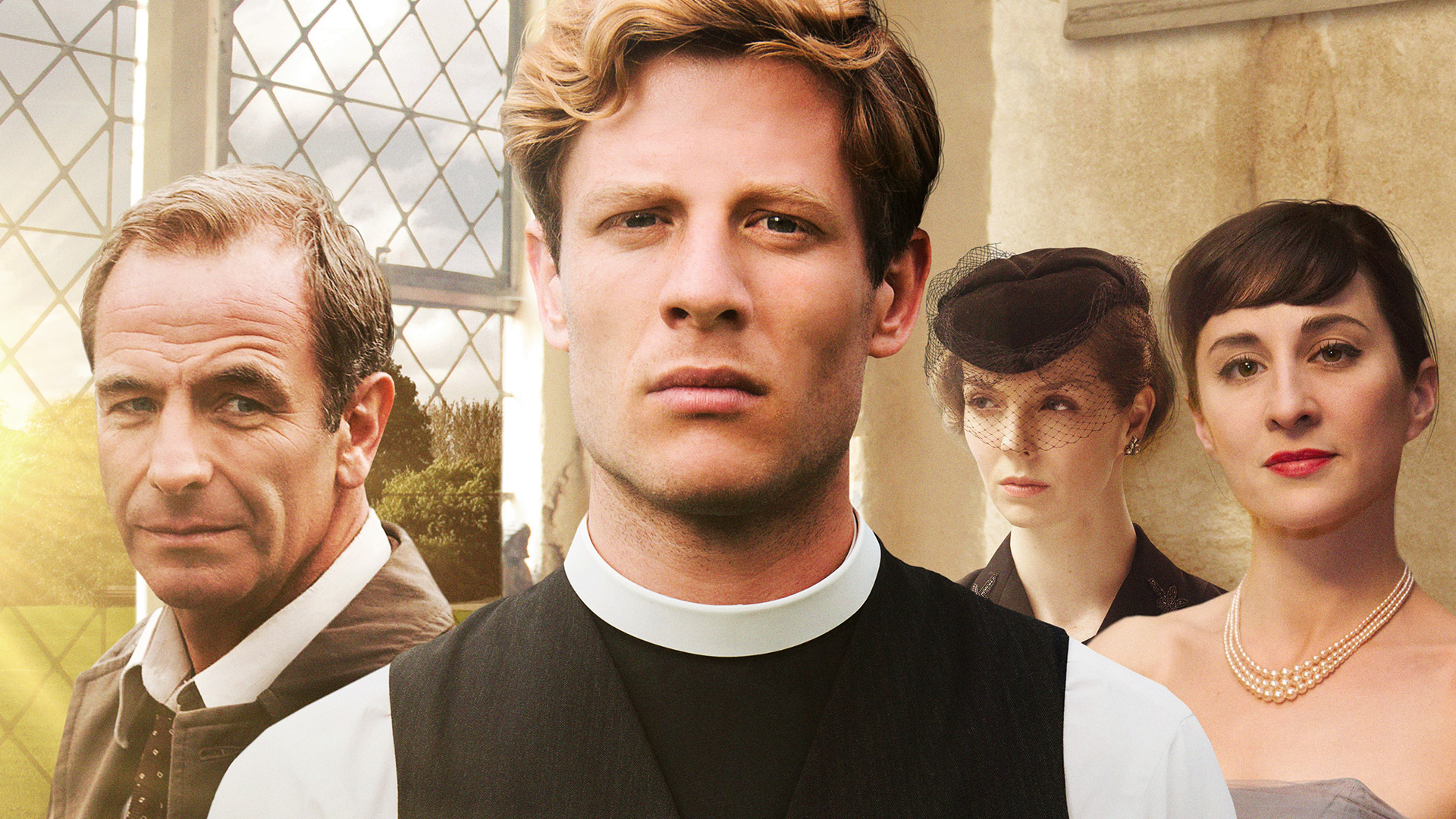
Grantchester: What a Fake Priest Reveals About Being Real Christians

A fictional character who seems real has me thinking about how much we play characters in our real life.

I recently started watching the PBS series Grantchester. I have a weakness for British dramas and mysteries and Grantchester is both. But what drew me to the show was a description I read that went something like "Sidney Chambers is a priest who loves God, jazz music, a good pub, and solving murder." When I read the description to my wife, she said, "It sounds like you, except for the solving murder part." (My half-joking response: "Maybe one day...")

What my wife said, however, was exactly what drew me to the show. "It sounds like you..." I've mentioned before in my blog my frustration with Hollywood typically portraying clergy as dangerous fanatics or clueless goodie-goodies. (And always men! Dear Hollywood: Women can be clergy, too!) But Grantchester was describing a priest that talks and acts like a real person. Here is a priest that actually sounds like me and most of the pastors I know.

Sidney Chambers goes to pubs, parties, and picnics. He does manual labor, has conversations where he is both compassionate and uncertain, has a complicated love life, and struggles with writing his sermons. In one conversation in episode three, he shares with a priest in training that "this job is difficult" because "most things aren't black and white; a lot of life is gray areas." While it's not a perfect show or a perfect reflection of my experiences as a pastor, it is the closest portrayal of a real life clergyperson I can think of seeing on screen. They are at least striving for authenticity.

That issue of authenticity in a fictional priest has got me thinking about authenticity in my real life job because as much as I dislike the stereotypes of pastors on tv, I know many stereotypes have some small grain of truth in them. Perhaps pastors are portrayed as defenders of spiritual certainty and moral purity because that's how we treat our jobs.

I know I often feel pressure (From myself? Culture? The Church?) to have a simple, clear answer to any situation and I can be afraid of appearing like I don't know for sure. After all, I'm supposed to be the authority on God, right? If I don't have faith all figured out, does that make me an imposter or a failure?

Despite my fears, however, I've often found that the richest and deepest conversations I've had with people have often been from sermons or Bible studies where I've risked saying, "This is hard for me to understand. I wrestle with making this fit my own life." (The most read blog article I've ever written was one where I shared my discomfort with the story of God asking Abraham to sacrifice his son.) In other words, when I've been more authentic myself, it's given permission to others to be more authentic in their faith.

And that permission giving is important because I think all of us have something in our lives where we fear authenticity. It may be related to our social group, our faith, our parenting, or our job, but I'm guessing there's at least one spot in our lives where we're afraid to do or say anything that might show we "don't know" or "don't fit in." Instead, we play stereotyped versions of ourselves, hoping we won't reveal we are imposters.

As Christians, though, we are called to be about the truth. Jesus says, "Let your 'yes' be 'yes' and your 'no' be 'no'" (Matt. 5:37) and promises "the truth will set you free" (John 8:32). God's truth doesn't set us free so we can become stereotypes, but so we can grow in the image of God. And growth is much stronger when we are able to admit the places where we need help and make ourselves vulnerable enough to create relationships that can grow with us.

I am a pastor that loves God, music, a good pub, and solving murder mysteries (on tv, at least). I don't have a perfect answer for every faith question or Bible story, but I pray that being my authentic self and inviting others to do the same will create a community where God's truth is revealed to us all.

From the Gray,
Pastor Ari

(As a side note, I don't think authenticity is the same as "letting it all hang out." I've heard of pastors swearing in the pulpit or oversharing personal details to the point of making people uncomfortable. The authenticity I'm thinking about isn't self-serving ["Here I am! Deal with it!"]; instead it creates a space where you and I can be imperfect together.)


“I stole my personality from an anonymous source.” -Hockey, “Song Away”


Monday, September 1, 2014

Old God Teaches New Tricks

(This blog post originally appeared in my church's newsletter for Fall 2014)

As we begin the autumn season, I’m reminded of a college professor I recently heard who was arguing that Labor Day is our cultural new year. His point is that in the United States, the end of summer and start of the school year mark a greater number of changes for most families than the move from December to January. Even in the church (especially in the church?), we typically function on a school year calendar of September through May for most of our activities and celebrate the end of summer with a Rally Day to kick off the “new year.”

We typically think of the start of the (Sunday) school year as the chance for students to come back and continue their learning, but as I’ve been preparing for our church’s fall activities this past month, I’ve found myself reflecting on how this cultural new year is not just for kids. Every year at confirmation, I try to make the point that confirmation is not a graduation, but an inauguration. We are not telling our young scholars, “You’ve learned all you need to know,” but “You’ve learned enough to start your adult faith journey and welcome to the continuation of your faith development.”

And yet we know from multiple studies that Biblical and religious knowledge is steadily decreasing among adults. Some point to decreasing church participation as a factor, or fewer adult classes, or poor educational materials. But I think there are two key things at the root of a lot of this. 

First is that the church has not promoted an environment of inquiry that makes it a safe place to ask questions and wonder out loud about things. Instead, many churches have promoted the sense that there are set facts about faith and you memorize ‘em, believe ‘em, and don’t challenge ‘em. (Even though Lutheranism has a strong tradition of intellectual curiosity, we’re not immune.) The second and related element is the “impostor syndrome,” the sense that everyone else in church knows the answers to the questions and so we’ll look stupid if we ask them. I see this all the time in questions that get prefaced with “I know I should know this already, but…”

Proverbs is a book in the Bible that is full of wisdom teachings and it is full of reminders to seek out learning throughout our lives: 
  • “Let the wise listen and add to their learning; and let the discerning get guidance.” -Prov. 1:5
  • “The heart of the discerning acquires knowledge and the ears of the wise seek it out.” -Prov. 18:15
  • “Get wisdom … Do not forsake wisdom and she will protect you; love her and she will watch over you.” -Prov. 4:5-6
In the spirit of Proverbs and the new school year, I want to challenge all of us to go back to school. During this fall, I’d love to see each of us pick one thing we’d like to learn about faith and pursue it. Read a book in the Bible you’ve never read, join a Bible study or discussion group, ask that faith question that’s always nagged at you, memorize the Beatitudes, study the history of ancient Israel, or read a book by Philip Yancey, C.S. Lewis, or Luther’s Small Catechism.

And then the second step is just as important: talk about what you’ve learned. I’d love to hear what people are doing (it helps me learn, too!), but be sure to talk to each other. That way, we can continue shaping our congregation into a place where it’s normal to ask questions, share ideas, and grow in faith together. And it keeps us faithful to our Cornerstones of Engaging the Bible, Building Loving Relationships, and Daily Acts of Faith.


Faith is not a destination at which we arrive; it is the journey on which we are traveling. Let’s travel together.

“You don't gotta fight, or make yourself belong, to be a revolution.” -Jars of Clay, "Revolution"