Showing posts with label hope. Show all posts

Wednesday, March 18, 2020

Yes, Virginia, God Really Loves the World

A member of my congregation texted me this week with a "HELP!!!" and a question from their child: "Is God punishing the world with COVID-19? Will God make me sick if I'm bad?" 

I know some of us may be getting questions like that (or even wondering ourselves). Below is the response I shared in case it is helpful for any other children of God out there. (The name has been changed for anonymity.)

"No, Virginia, God is not punishing the world with COVID-19. God created a complex and amazing world. Just as we don't always do what God hopes for us, the rest of creation doesn't always do what God hopes either. Sometimes it's a disease and sometimes it may be a natural disaster.

"These times are scary, especially because they feel so much bigger than us. But God ALWAYS loves us and wants what is best for us. When we are scared, we can do something. We can help God in doing good and making things better.

"We can pray. We can talk to people to help them feel better. We can make cards or letters and send them to people. We can see if we can donate something to help people. We can help the helpers so they can do their jobs well. We can find small things to do to help parents.

"God tells us that love changes the world. When times are scary, we need that love as much as ever. Keep loving and don't be afraid. God loves you."


From the Gray,
Pastor Ari


“There’s still times I fall apart and all I am left with is ‘why’s, but then your love falls like a heavy rain and my heavy heart doesn't feel the pain.” -Philip LaRue, “Chasing the Daylight”

Sunday, March 15, 2020

How to Be Church Without Going to Church (Pastoral Letter for Coronavirus)

(Note: This is adapted from the email I sent to my congregation announcing our decision to cancel worship.)

On Friday evening, my church decided that we will cancel all church events, including worship, for two weeks in response to the coronavirus. We hope to reopen on March 29, but that will depend on what happens in those two weeks.

I slept in my office during a Saturday blizzard once to ensure I wouldn't have to cancel worship, so know that canceling worship is not something I take lightly. My natural inclination is to let my Scandinavian stubbornness say, "We're not going to let a virus tell us what to do." But stubbornness and strength are not the same as wisdom. When we look at how this virus has (or has not) spread in other areas around the world, it is clear that limiting social gatherings has an impact in slowing the spread and reducing stress on hospitals. I don't want our church to be a place that increases infections. That is not "Sharing the Love of Jesus Christ with All People," as our mission states.

BUT, not meeting in person does not mean we don't have church. Church is not a building. You are the Church, dear siblings, and this is a time the world needs us more than ever. We can still "Share the Love of Jesus Christ with All People." We just need to be a little creative.

So, what are we doing?
  • I will be using our facebook page (www.facebook.com/martinlutherchurch) to share resources and ideas and avoid flooding our email boxes. (If anyone has a good sharing app, please let me know.)
  • We will be creating a plan to have worship available by streaming or online for Sunday morning. Details will be on our facebook page.
  • We will be putting together a plan for caring for our homebound and vulnerable members. If you are interested in being part of a calling team, let me know. If you or someone you know needs pastoral care, please let me know. Don't assume someone else has told me.
  • Isolation can be very hard, and the community of support we have at MLC is one of the most valued things people name. I encourage you to call or text someone from church once a day. We can maintain friendships and care for one another this way. If you can, please reach out to members you haven't seen in a while.
  • Do the same for friends and neighbors outside MLC. "You are the light of the world" -Matt. 5:14
  • We are putting together a system to care for physical needs of people, too. If you depend on food banks for food or other items, please email me and we'll connect you with someone to arrange delivery. Your request will be held in confidence by our small team.
  • If you are someone whose mental health or addiction suffers from isolation, please find someone to do regular wellness checks on you. Remember, you are loved and not alone.
  • I'm planning to have regular conversations in our facebook group so we can continue to learn and grow together. If you have ideas for distance activities we can do, please let me know.

We have not experienced a pandemic like this in our lifetimes. We know it is serious, but not how disruptive it will ultimately be. Hopefully we will look back and say it was not as bad as we feared. 

Whatever happens, the Gospel message of Jesus Christ is as true now as always. God promises new life and resurrection, God meets us in our places of fear and death, and God's grace is greater and more permanent than any evil in this world.

We may not be going to church for a few weeks, but we can still BE the church. You are the living stones of God's temple (1 Peter 2:5). Do not be afraid, dear Church, God is with you.

From the Gray,
Pastor Ari

“I can’t change what can’t be changed, but I’m still gonna try.” -Garrison Starr, “To Garrison, On Her 29th Birthday”

Tuesday, October 29, 2019

Finding Love in Chernobyl

This summer I binged my way through the HBO miniseries "Chernobyl," a dramatization of the nuclear plant disaster in 1986 and its aftermath.

I loved it.

There are themes and ideas in "Chernobyl" that could fill a book or a year's worth of blogs. It is a condemnation of lies.  It is a warning against fear of imperfection. It is also a celebration of the ordinary heroes of history, namely the thousands of citizens and soldiers who responded to the disaster and suffered as a result.

In the second episode, there is a scene of some of these ordinary heroes that I found profoundly moving. After the initial explosion, the leaders gather a group of plant workers and ask for three volunteers for a special task. In return they will get a permanent increase in pay and other benefits. The workers, smelling baloney, refuse to volunteer until they know what is actually happening.

After some silence, the leaders tell the truth: the reactor is still melting down and when it falls into the flooded basement, it will cause an explosion that will likely kill or contaminate millions of people. The only solution is to go into the basement and manually open the drainage pipes. The basement is so filled with radiation that anyone who enters it will die within a couple years. There's even a chance they will die in the basement.

They will likely never enjoy their additional benefits. They will not be remembered by history. They will not be thanked by the millions who never knew their lives were in danger. Their only real reward is to know that they will give their lives in order to save millions more.

Slowly, three men stand up and volunteer. They are named in the show, but I don't know if they are real names or they were made up to fill in a blank space in the pages of history. The episode ends with them walking into the dark basement to meet their fate.

Years ago, Veggie Tales in the movie "Jonah" defined compassion as "you see someone needs help and you want to help them." In John's gospel, Jesus says, "No one has greater love than this: that one lay one's life down for a friend" (John 15:13). In these few heroes forgotten to history, I saw that love and compassion personified. They voluntarily shortened their lives in order to save millions of people that didn't even know they were in danger.

Not all heroes are famous and not all love is romantic. Sometimes it is just doing what needs to be done. Sometimes God's grace can be seen in an HBO disaster movie.

From the Gray,
Pastor Ari


“You're a danger, like love and radiation.” -All Star United, “Love and Radiation”


Thursday, August 8, 2019

The Cry of the Prophet: A Response to the El Paso and Dayton Shootings

"O Lord, how long shall I cry for help, and you will not listen? Or cry to you 'Violence!' and you will not save? Why do you make me see wrongdoing and look at trouble? Destruction and violence are before me; strife and contention arise. So the law becomes slack and justice never prevails." -Habakkuk 1:2-4a

"Lament" by Jeffery. flickr.com
This past weekend, our nation was once again rocked with news of mass shootings. This time they were only 13 hours apart in El Paso, Texas and Dayton, Ohio. As of this writing, there are 31 people dead and 50 injured, not counting the people killed and injured a week before at a Walmart in Mississippi or a festival in Gilroy, California or the dozens of others this year alone.

Mass shootings are a crime that always grab my attention, partly because one of the first took place a few miles from my home in Oregon. And whenever there is a national tragedy, I feel compelled to offer a pastoral word in sermon or letter to my congregation.

I've done this after the Sikh temple shooting in Oak Creek, WI...

and the Newtown shooting...

and the Boston bombing...

and the Charleston shooting...

and the Ferguson protests...

and the Charlottesville violence...

and... and...

This week, however, I found that I didn't know what to say. I've spent the past four days staring at my screen at a loss for words.

How many times can you say, "God weeps with us" and "Jesus is making the world better" before they just feel hollow and cliché?

How can I proclaim hope when it seems that nothing ever changes?

It was in the midst of this that I stumbled upon Habakkuk and found the words I needed. Habakkuk is one of the Minor Prophets in the Hebrew Scriptures (or Old Testament) and I mean minor. It is about a page and half long in most Bibles and it is not a favorite for pastors to preach or teach because it is a lament. But that is why it is perfect for me this week.

Habakkuk is a prophet crying out to God about how violent and corrupt and terrible the world is. "Destruction and violence are before me... and justice never prevails," he says in his opening words. He's basically writing a letter to God to say, "Dude! What the hell?"

It is a type of writing that is actually pretty common in the Bible. Lamentations, Ecclesiastes, portions of the prophets and MANY of the Psalms (e.g. Psalms 13 and 130) have a similar theme and they hold a great lesson for us: we can be honest and frank with God. Sometimes we find the strength to say or do the right thing, but sometimes we just need to scream or cry or fall apart and God knows that.

So if we are angry about the state of the world, God can take it; if we need to cry over senseless deaths, God will listen; if we can't figure out how to move forward because we feel lost, God is patient; if we can't do or offer anything positive because we just feel empty and overwhelmed, God understands.

Habakkuk eventually hears from God ends his letter with a word of hope: "Though the fig tree does not blossom, and no fruit is on the vines...yet I will rejoice in the Lord; I will exult in the God of my salvation" (3:17-18).

Hopefully tomorrow I will rejoice in the Lord, too, but today I'm angry and sad. And that's okay because it puts me in the company of God's saints through the ages.

Come quickly, Lord.


Standing in the Gray,

Pastor Ari


“But you don't get thick skin without being burnt.” -twentyone pilots, “The Hype"


(Even pastors need to hear the Gospel from others. Thank you to those who spoke to me this week.)

Tuesday, July 9, 2019

Learning to Live Together

Being a part of a community is hard.

It is, right?

Whether that community is our neighbors, co-workers, or the people we live with, getting along can be hard work. We have different opinions, different priorities, different favorites, and so on. Even in church, we don't agree on everything. We may love one another as Christians, but not always like each other as people.

Now, when we get along with the people around us, it's fantastic, but when we don't, it can be everything from stressful to destructive.

I've been thinking and reading and talking a lot recently about how to get along with other people because it seems to be a concern right now. There is a general consensus that we aren't as polite, tolerant, or open-minded as we used to be  need to be as a society.  No one likes the division we're seeing in our world right now, but no one's quite sure how to deal with it.

I don't have perfect answers, but I firmly believe that the God who told us to "love one another," "love your enemies," and forgive "seventy seven times" does not want us to live divided or suspicious. And I believe the Church has a role to play in this, helping to proclaim God's reality in our world.

To that end, I'm planning to write a series of blogs about how to live together (#howtolivetogether), sharing some of the wisdom I've been uncovering and hopefully starting some conversations or habits that move us in a new direction. In the resurrection, Jesus transformed the world and in baptism, we are transformed as well. With the Spirit's help, we can continue the work of transformation.

Standing in the Grey,
Pastor Ari


“It feels like giving in. It feels like starting over. It feels like waking up.” -Jars of Clay, “Two Hands”


Thursday, May 10, 2018

Farming, Faith, Persistence, and Hope

"[Jesus] also said, ‘The kingdom of God is as if someone would scatter seed on the ground, and would sleep and rise night and day, and the seed would sprout and grow, he does not know how.'" -Mark 4:26-27


“We can do no great things — only small things with great love.” -Mother Teresa

I've been thinking a lot recently about what it means to be a Christian in our daily lives. How do we live in a chaotic world where so much seems to be out of our control?

So I was struck by the passage from Mark when I read it recently. Though the farmer scatters seed and tends the earth, there is still a mystery to growth. But she trusts that if she waters and cares for the field, there will be growth. There is no one grand gesture that creates growth, but sustained, patient, repeated attention to the seeds.

Jesus says that God's kingdom of grace and love acts in the same way. There is a mystery to the actions of God in this world that we cannot fully understand; we can simply trust that adding our labor will assist in the growth of new life. 

We are like farmers, tending the earth, sowing the seed, but not knowing exactly how it works, nor knowing which seeds will sprout and grow, but trusting that if we continue to seed the world with justice, tend the earth with love, and water it with generosity, a harvest of grace will come forth. 

Patience and persistence in small acts of love may not be sexy or exciting, but they are the tools of God's conquest.

From the Gray,
Pastor Ari


“Faith and guts to guide you; wander ‘til you find you.” -Jars of Clay, “Inland”


Friday, March 17, 2017

Addressing Mental Health in the Church

A friend shared this article from the Washington Post on facebook a few months ago and I've found myself thinking a lot about it ever since. In the essay, Charlotte Donlon writes about living with bipolar disorder, her faith, and her frustration that the church rarely addresses mental illness in meaningful ways, if at all. For me the essay cuts me in a couple different ways.

First, as a pastor, I read how the author's pastor dismisses her mental anguish in conversation and unintentionally shames her in a sermon and I cringe. I cringe because on days where I feel like less than a superhero, that's what I worry I'm doing. I am in near constant fear that I will say something that shames or hurts someone without me meaning to or that I just won't have the right words to say to help. I've learned in my ministry that there are many times where the only true answer is "I don't know." But when someone comes to me with a difficult question looking for some kind of help or hope, it rarely feels like that level of theological honesty is the right answer. Chronic illness, serious childhood diseases, and sudden deaths are all things that make me want to scream "Why God?" with everyone else.

At the same time, I resonate strongly with Donlon's essay because it's my own story, too. I've lived with depression for my entire adult life and shortly before I first read this essay, I was also diagnosed with a generalized anxiety disorder. I have more family members and friends that live with mental health issues than I can count on one hand and I know they are not uncommon in the faith communities that I've served. And yet, there is still a stigma around mental health.

Many churches do awesome work around feeding programs, addiction recovery, poverty assistance, and even healthcare, but it's interesting to me how almost all those programs are directed externally. Meanwhile, internally, few churches in my experience foster an environment that normalizes things like mental health, divorce, addiction, autism, and other issues that are, in fact, normal for most people. Instead, many of us put on masks and pretend to be what we think is "normal" and think we're the only ones faking it.

I don't have any answers for fixing this, certainly not on a grand scale, but I am a big fan of Brené Brown's work that says risking vulnerability and honesty is the root of joy and wholeheartedness and I know Jesus said "the truth will set you free" (John 8:32). So I hope that being vulnerable and honest about my own struggles with mental health might start to normalize it for others.

So...

I have anxiety and depression. I'm medicated for it now and it's helped me a lot. Most of the time I'm fine, but like arthritis or diabetes, it can flare up at times and I can't function at 100% when it does. I'm not ashamed about living with anxiety and depression. In fact, sometimes I think of them as my super powers because I know they are closely connected to my drive to be my best and my creativity.

And I know I'm not alone. And if you're like me, then neither are you.

I pray this is something we can talk about more and I pray that the gift of God's grace gives us the confidence to make being normal... well...
normal.

From the Gray,
Pastor Ari

P.S. If you struggle with depression or think about hurting yourself, please get some professional help. If you can't, have a friend help you. Take it from me: things can get better.


“There’s one more thing I want to say: Our brains are sick, but that’s okay.” -twenty one pilots, “Fake You Out”


Friday, July 22, 2016

Getting Uncomfortable Can Be Good

Last Christmas, my family had the opportunity to join in a tradition outside our own experience. My daughter is in a dual-language program at her school that combines students who are native speakers of both Spanish and English so they can learn from and with each other. One of her friend's family is from Mexico and they invited us to come to their Las Posadas celebration.

Las Posadas is a religious tradition for Mexican Catholics recalling the pilgrimage of Mary and Joseph to Bethlehem and their search for housing along the way. That's about all I knew when we arrived at their house for the celebration and crammed into their crowded living room. We were handed a sheet of paper full of Spanish songs and prayers and without much warning the event began. Various people took the lead with songs and prayers, a young girl and boy dressed as Mary and Joseph moved around the room at certain times, my wife and daughter jumped in easily as they are both fluent in Spanish, and it was clear that for everyone outside my family, the happenings were familiar and meaningful.

But I was lost.

I know enough Spanish to mumble my way through something written on the page and I felt honored to have been invited to what was clearly an important family event, but I spent most of the evening confused, and maybe even uncomfortable.

Thursday, March 3, 2016

Opening Our Eyes to the Well

“The angel of God called to Hagar from heaven and said to her, ‘What is the matter, Hagar? Do not be afraid; God has heard the boy crying as he lies there.’ Then God opened her eyes and she saw a well of water. So she went and filled the skin with water and gave the boy a drink.” (Genesis 21: 17, 19)

I am part of a monthly coaching group with four other pastors. The first week of every month, we join a conference call and share encouragements, insights, and ideas for strengthening ourselves and our ministries. In one of our sessions, we were asked to share a Bible passage that was important to our ministry. Several “classic” texts were mentioned before one of the pastors named the story of Hagar as her favorite.

Now, Hagar is kind of a sad story and certainly not one I’d ever considered for inspirational material. Hagar is a servant woman who is used by Abraham so he can father a child, Ishmael. Later on, after Sarah gives birth to Isaac, Hagar and Ishmael are cast off to fend for themselves in the desert. After running out of water, Ishmael is on the verge of death and Hagar cries out in sadness for her son. 

Like I said, it’s a sad story, but it’s this point in the story that my colleague named as the meaningful one for her. When Hagar cries, God hears her and then “opened her eyes and she saw a well of water” (Genesis 21:19). “The miracle,” my colleague said, “wasn’t that God created a source of water, it was that God opened Hagar’s eyes to the well that was already there.”

There are many desert places that we will confront in ministry and in our lives. It’s easy to want a miracle to get us out of those places, but big, flashy miracles are rare. Perhaps the miracles we should be looking for are like Hagar’s, where God opens our eyes to something that was already in front of us. 

I know I’ve experienced this recently as I was confronting a desert time in my life. I was overwhelmed with worry and stress and looking for a magic bullet. I didn’t find that magic bullet, but I was amazed to find the resources I had in friends and acquaintances who provided advice, references, and wisdom from their own experience. 

There are always challenges that will arise in ministry and life. As we confront them, may God open our eyes to the wells of hope that may be around us. 

In God’s Amazing Grace,

Pastor Ari

“Carry me; your love is wider than my need could ever be.” -Jars of Clay, "River Constantine"

Friday, November 6, 2015

What is Normal Anyway?

This morning my church hosted a network meeting of Cross+Generational ministry workers in our area. In the course of our conversation, we discussed mental illness and the difficulty many people have talking about their own or a loved one's mental illness, even though it isn't nearly as unusual as people think.

We stigmatize many issues like mental illness as not being "normal" and therefore feel uncomfortable talking about them, but perhaps the problem is our idea of "normal."

Statistically, it is more likely than not that you or someone you love has experienced mental illness, addiction, miscarriage or fertility issues, incarceration, sexual assault, or abuse. By definition, then, it isn't the person who has never dealt with any of these issues that is "normal," it's all the rest of us who have. And if that's the case then why do we so often treat all these topics as taboo or strange? Especially in church?

As I think about this further, isn't it in the Bible and Christian theology that it's normal to be broken and imperfect? That we experience troubles?

Jesus said he came not for the healthy but the sick (Mark 2:17), and he meant the sin-sick, the heartsick, the sick and tired of life, and sick to death of hiding my troubles.

If that's true, then church is where we bring our struggles and hurt to break down stigmas and taboos, not where we hide them. Then church really is for normal people, but normal doesn't mean what we thought it means.

From the Gray,
Pastor Ari


“We made an art out of neglecting what we don’t want to see.” -Jars of Clay, “Skin and Bones”


Wednesday, October 28, 2015

Living With Mystery (Blog on Job, Part 3)

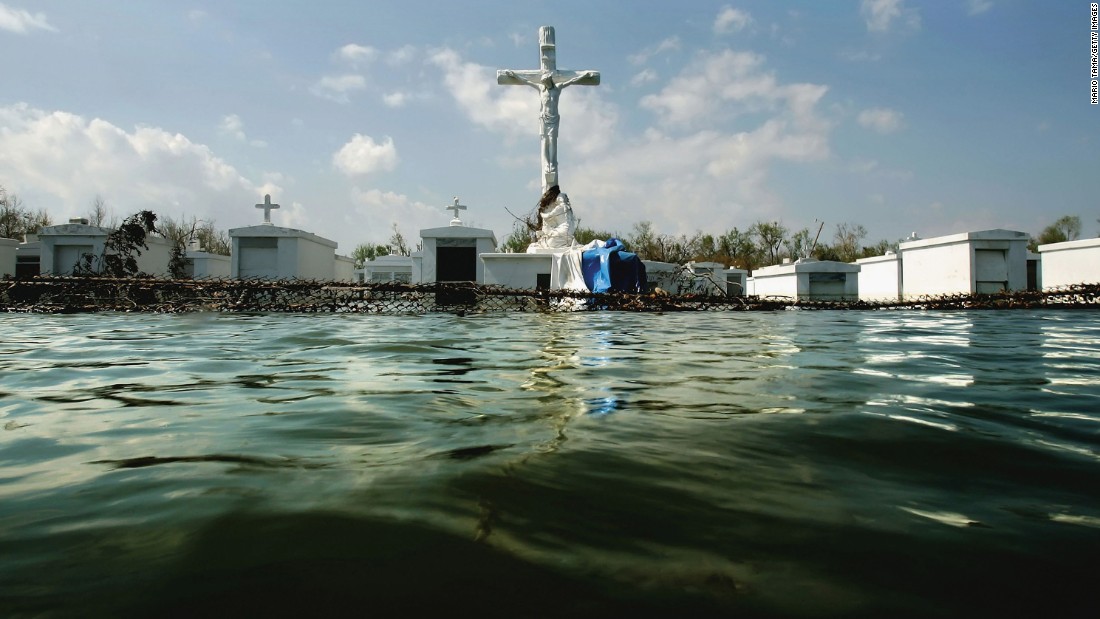
New Orleans churchyard in the aftermath of Hurricane Katrina.
(This is part three of my blog on Job. You can read part one here and part two here.)


In the book of Job, the character of Job loses all he has because of afflictions from "the Accuser" who bets God that Job will curse Him if Job suffers enough. Job spends chapters arguing with his wife and friends about the reasons for his suffering and pleading with God to answer his prayers. In the third lesson assigned for reading in the lectionary this fall, God finally answers Job.

And what an answer it is.

"Then the LORD answered Job out of the whirlwind: 'Who is this that darkens counsel by words without knowledge? Gird up your loins like a man. I will question you, and you shall declare to me'" (Job 38:1-3). God proceeds to ask Job dozens of questions about the power of God. Can you measure the foundations of the earth or number all the clouds in the sky? Can you command the lightning or create a sea monster for fun?

God's response to Job is to put his questions in a broader context. The central tension that Job raises is “God is just” and “I am innocent.” The idea being that a just God wouldn't let an innocent person suffer. But God’s questions to Job undermine the very premise of Job’s complaint.

If you want to understand suffering, then can you first understand the complexities of the earth? Can you understand the tiny details of the galaxy and everything living in it? If not, then why do you get to decide what’s just? In this complex, crazy world, who said innocent people never face trouble? I'm God and I'm working with knowledge you can't possibly grasp.

God's questions to Job show there is a paradox we all live in. Each of us is unique and distinctly important to the world around us, but we are also largely insignificant in a world with billions of people and infinitely complex ecosystems. Therefore tragedies are both personal and massive. Disasters can hits thousands of people or cancer can infect millions and we can understand that most of the affects are random, but when they affect me or someone I love we can't help but look for a reason. 

And sometimes there isn't one. Sometimes, God suggests, there are enormous systems at play around us and we just get caught in the sweep. And if there is a reason, it is far more complicated that we can grasp. 

None of that is to say that God is unjust or uncaring, simply that the world is more chaotic and unpredictable than our reason-seeking brains would like and justice might not fit our simple definitions. Jesus himself says that the sun shines and the rain falls on the just and unjust alike (Matthew 5:45).

Martin Luther wrote that God had a visible side (deus revelatus) and a hidden side (deus absconditus). The visible side is what we can perceive and understand as humans, but most of God is hidden from us, Luther said, and the part we can see is only God's back. In Job, the writer lays the answer to much of life's suffering at the feet of the hidden God. How can we understand suffering when we cannot understand God?

On it's own, such an answer is unsatisfying. It smacks too much of the condescending adult who tut-tuts a child and says, "You just couldn't understand..." But that's why the revealed God is such an important part of this struggle.

Luther said that since we cannot know the hidden God, we must find faith in the God as God chooses to be seen by us and God chose to be revealed in Jesus Christ. Jesus makes it clear that God doesn't wish us harm and that we are loved. God is the business of promoting true life and inviting us to do the same. And in John 11, we see Jesus weeping at the tomb of his friend Lazarus, visibly disturbed by the pain death has caused. That's the revealed God: standing with us in our pain, joining us in our mourning, and promising that pain won't be the last word.

Job raises some deeply important questions that it cannot fully answer and we are still wrestling with thousands of years later. Ultimately there is mystery around suffering that we must content ourselves to dwell within for some time. We may not always understand suffering, but we are not alone when we suffer. We are not alone because the same questions are asked by millions like us. And we are not alone because God chooses to be found in suffering with us.

From the Gray,
Pastor Ari


“I want a reason for the way things have to be. I need a hand to help build up some kind of hope inside of me.” -Train, “Calling All Angels”

Thursday, June 11, 2015

How to Build Your Eulogy

David Brooks of the New York Times recently released a new book titled "The Road to Character" in which he explores stories of people whose moral traits he admires. The seed for the book, he says, came when...
It occurred to me that there were two sets of virtues, the résumé virtues and the eulogy virtues. The résumé virtues are the skills you bring to the marketplace. The eulogy virtues are the ones that are talked about at your funeral — whether you were kind, brave, honest or faithful. 
We are masters of building our resumé virtues, Brooks says, but are largely clueless about building our eulogy virtues. So he set out on a quest to fill his "moral bucket list."

I find his distinction between resumé and eulogy virtues to be very powerful because it strikes me as a secular way of stating what Jesus mentioned several times. In Matthew, Jesus tells a crowd to "store up treasures in heaven." And in Luke, Jesus warns about the troubles that come to those who store up riches for themselves, but "are not rich toward God."

Jesus invited people into a new way of life by talking about and demonstrating a life that wasn't defined by economic or political success, but instead led people to use words like hope and light and joy and love and freedom. God's interest in our lives, he said, leads us to prioritize the eulogy virtues and puts the resumé virtues in a proper (limited) perspective.

For most of my life, I've heard people lament that we work too much, are focused on the wrong priorities, etc., but it seems to me that more people are starting to publicly do something about it. There seem to be a growing number of stories about people taking less pay for jobs with "greater meaning" or arranging their lives for more time with family. Brooks seems to be one of those. And I hope that in the coming years, more of us will, too. How powerful would it be if our world was filled with people whose lives led others to use words like hope and light and joy?

From the Gray,
Pastor Ari


“Am I a part of the cure or am I part of the disease?” -Coldplay, “Clocks”


Thursday, March 26, 2015

How Psalm 139 Answers Our Deepest Fear

I was at a conference this week for some continuing education and the devotion one morning was based on Psalm 139. Psalm 139 is a well known and beloved poem that speaks of the depth of God's knowledge of us (You have searched me and know me. You knit me together in my mother's womb.) and the impossibility of escaping God (Where can I flee from your presence?).

The presenter asked us a reflection question about what these verses mean to us, but I couldn't help thinking about a different question: Why do people love this Psalm so much? Why do I? There seems to be something universally appealing about this passage and after a minute or so of not paying attention to what was actually going on, I thought, "It's about being known."

I think being understood by another person is one of our deepest held needs and conversely, not being known is one of our deepest fears. We are social creatures at heart and thrive on having at least one person who knows our dreams, gets our humor, loves our quirks, and can even see us at our worst and wants to stay with us until we're better. To be known is to be loved.

And yet many of us can feel lonely or isolated when we feel like we're misunderstood or insignificant compared to others or the vast flood of information in our daily lives. Why should anyone care about me?

Psalm 139 puts into the light one of our deepest fears and offers an answer because it speaks of an intimate relationship with God. It says that God knows us better than any person every could because we cannot escape or hide from God's sight. And yet, this God still wants to be close to us.  We are not unknown, unseen, or forgotten because God created us and knows us completely.


Thursday, March 5, 2015

When Broken Isn't Really Broken

One of the classrooms at my son's school likes to post a "Quote of the Week" on its bulletin board. Earlier this year, the quote was "Broken crayons still color."

As I passed it daily, it seemed to me like a description of resurrection, of Easter, of the kind of eternal life Jesus says we have now.

God used a lot of broken crayons to mark the shape of God's reality, shade the world with love, and draw a picture of hope for today.

If you feel broken, keep adding your color to the world. It's part of the picture.

From the Gray,
Pastor Ari


“We just want the fire in our bones.” -Emperors, “Be Ready When I Say Go”


Thursday, February 12, 2015

How to Meet the Apocalypse in Style (A Throwback Post)

(In going through some old files, I stumbled upon some old blog posts and newsletter articles from my previous positions as a pastor and seminary student. While some make me groan with embarrassment, I will occasionally post a "throwback" article from the archive. Here's one I wrote back in 2011.)

A couple weeks ago, while driving through Sussex, I saw a yard sign that said the world was ending on May 21. Since this was obviously a professionally printed sign, I was curious who was behind this revelation. 

Googling the information later, I discovered that a Christian preacher and radio host in Oakland, CA named Harold Camping had “discovered” the rapture is going to happen at 6pm on Saturday, May 21 by carefully working through Biblical math equations and checking them against historical events. His conclusions have led thousands of people to quit their jobs, sell their possessions, and/or drive around the country trying to save as many souls as possible before this Saturday. 

Given that Christians do hope and pray for the return of Jesus and that we’ve seen hundreds of such predictions come and go in the past (Anyone remember Y2K? 9/9/99?), what is a proper Christian response to news like this?  My response is “nothing.”

When I say “nothing,” though, I don’t mean that we should do nothing at all. Instead, I mean to say that we should do nothing different.  Martin Luther, when asked once what he would do if he knew the world would end tomorrow, replied, “I would plant a tree today.” His response suggests that we should always live in hope of tomorrow, always work to create life, always trust that “whether we live or we die, we are the Lord’s” (Romans 14:8). 

As Christians, we live lives of hope, love, generosity toward others, and freedom from death and fear because of the actions of Jesus Christ. Why should any of that change, even if we knew for certain that the world were ending this Saturday?  

One of the trademarks of the American Evangelical movement has been a fascination with the Apocalypse and obsession with interpreting the “signs” of Revelation, Daniel, and Ezekial. Aside from the fact that Jesus himself says that “only the Father” knows when these things will happen (Matthew 24:36), my criticism of this scholarship is that it puts our energies into the wrong pursuits.  Instead of looking for meaning in the “signs” of the Bible, we should be living according to the meaning in plain words: Love God and your neighbor as yourself. Over and over, the Bible tells us that serving others is true worship to God, not figuring out a secret date.

So whether you think the world will end this Saturday, or you think this is just another bogus doomsayer, do nothing different. Live with hope, joy, and self-giving love toward others. We are the Lord’s. Those words are all the certainty that we need. Now, if you’ll excuse me, the world is ending and I need to plant a tree...

From the Gray,
Pastor Ari

“Take these chances, place them in a box until a quieter time. Lights down, you up and die.” -Dave Matthews Band, “Ants Marching”

Thursday, December 4, 2014

These 7 Things Give Me Hope

This year during Advent, my worship planning team came up with the idea of giving gifts each week, or more accurately, naming some of the gifts God gives to us. Each week we are sending worshippers home with "gift tags" like these pictured that name a gift we get from God and then have a question or activity to connect the gift with life during the week.

This week, in response to Jesus' message "Heaven and earth may pass away, but my words will not pass away" (Mark 13:31), we made this past Sunday about "Hope." The tags we sent home said, "Each day, name one thing that gives you hope about the future." As I've considered this challenge this week, I thought I'd share my list here to encourage and hopefully spread the conversation beyond my congregation.

So here are my seven things that give me hope for the future:
  1. My Kids - I'm biased, I know, but my kids are kind, loving, creative, whip-smart, and generous.* (My daughter recently took some of her allowance to school and gave it to one of her teachers whose smart board had died the day before. The teacher returned the money with a very touching thank you card.) If my kids keep these traits, I have no fear about their own future and if there's a handful more like them in the world, the rest of us will be okay, too. (*Most of the time.)
  2. Modern Medicine - One hundred fifty years ago, we didn't know about germs and we've since destroyed small pox and vaccinated many other diseases into an afterthought. Ebola is doing awful things in Africa now, but twenty years ago we thought AIDS might end humanity and it is now manageable. Just in the time I've been a pastor, I've seen surgeries that used to hospitalize people for days or weeks turn into out-patient surgery. (I once missed visiting someone following a hip replacement because they were released within 48 hours!) Cures and treatments that were once miraculous are now commonplace and more miracles are becoming common every year.
  3. The Fact That My Elders Were Just As Uncertain About The World Their Kids Would Inherit - I recently had a conversation with a mother who confessed she had been uncertain about ever having kids because "I didn't want my kids growing up in a world like this." "But," she said, "My mother and grandmother told me they thought the same thing in their youth." I've thought this same thing, but the world has never turned out quite as bad as the previous generation has thought and has largely thrived in the past century. If their pessimism was wrong, mine probably is, too.
  4. Music - Most people who know me know that I love music. I usually have it playing in the background while I work or clean and my idea of a self-indulgent evening is to sit down with a set of headphones and listen to a favorite album from beginning to end with my eyes closed. Music gives me hope because at its best, I find it to be a transcendent experience that opens my mind and heart to visions of the world as it should be. A great song can transport me to an emotional plain that inspires and energizes me to make myself and the world around me a better place. 
  5. Surprise - I am regularly surprised in my life. I'm surprised by compliments from unexpected sources, by unsolicited help, by small and even anonymous acts of kindness, by people who share hidden passions and interests, by children that blurt out simple but powerful statements of love and truth. It gives me the sense that there is much more goodness and kindness in the world around me than is known or seen. I tend to focus on tragedies and troubles (thank you, media), but there is a great deal of uncelebrated kindness happening, too.
  6. My Spouse - She's my biggest cheerleader and best support. I'm amazed and inspired by her. To crib from Jack Nicholson in "As Good As It Gets," she makes me want to be a better person. Any future with her is worth looking forward to.
  7. My Baptism - Martin Luther once said that when the dark voices start whispering how worthless, hopeless, or sinful you are, a Christian should cry back, "But I am baptized!" As a Christian, when I feel hopeless about myself or the future, knowing that I've had God's promises poured over me -- promises that can't break, tarnish, or expire -- is a great source of hope for me.
I'd love to hear your own thoughts on where you find hope in the comments (or in person). Thanks for taking the time to read mine and may your holiday season be filled with hope. 

In the Gray,
Pastor Ari

“Author of the moment, can you tell me: do I end up happy?” -He Is We, “Happily Ever After”


Tuesday, November 18, 2014

What's Coming to You...

(Note: This post was originally written for my church's newsletter.)

It happened this past week in mid-November. Both my kids at different times asked the age-old question, “When is Christmas going to be here?” They are already anticipating the presents, decorations, and food that heralds the heralds of Christ’s birth. And who can blame them? In spite of the stress that some of us feel before Christmas, it’s still a joy and wonder to wait for what we all know is coming. 

I was reminded this morning by a devotional reading that the very name the Church gives for the weeks before Christmas — Advent — means “coming.” It is a time that we live with patience and preparation (and excitement!) for what will soon arrive. One of the things that I love about Advent is how it represents the way we are meant to live as Christians all the time. We are always looking with hope and excitement towards the future, always keeping an eye on what’s coming. 

I find this an important reminder for myself as we head into another Christmas, a new year, and another (early) winter. There are always reasons to be pessimistic about…almost everything, and this year is no different, with ISIS and Ebola causing havoc and heartbreak, Russia seemingly focused on another Cold War, domestic politics that are as partisan and bitter as most of us can ever remember, and so on. (Like, why is it this cold in November?) 

But as Christians, we are called to live in the now and the not yet. While we seek to love and serve in the present, to ease suffering and care for those in need, we also speak of the not yet, the coming Kingdom of God (or, as I like to call it, “God’s Reality”) where joy and love will prosper and suffering and trouble will end. Christmas happens just after the shortest day of the year and for generations, the Church has used the circumstance as a metaphor that once Jesus appears, light in the world increases.


In October and November of this year, I’ve preached on a lot of texts from Matthew where Jesus describes his eventual return. Many of these have images that can seem threatening and scary (Matthew is very fond of the phrase “weeping and gnashing of teeth”), but for Christians, these words carry a great promise: God doesn’t want the world to be suffering and unjust and some day Jesus is coming to fix it all. All the things that cause us fear and heartbreak — near or far, big or small — are temporary compared to the promises of God. Therefore, we look for the coming of Jesus just like we wait for the coming of Christmas: with joy and excitement. When is Christmas going to be here?

In God's Amazing Grace,
Pastor Ari

“Blah blah love and war.” -The Rescues, “Did It Really Even Matter”


Thursday, July 31, 2014

St. Paul's #1 Reason to Read the Bible

In Romans 15:4, Paul writes: "Everything that was written in the past was written to teach us, so that through the endurance taught in the Scriptures and the encouragement they provide we might have hope."

I've seen the Bible treated as something to be memorized and recited, as a history book, or as a self-help book or rule book for living (and to be fair, all of these can be found in scripture and have value). There are many who talk about Bible codes to interpret the future or discover the secrets of the universe. But for Paul, the goal is not secret knowledge or personal success, but hope. The scriptures teach us about "endurance" and "encouragement" so that "we might have hope." Hope in the God who has been present and faithful for all those who have struggled with faith and love before us.

In other words, the stories of God's people have been preserved and shared so that we can read ourselves in them and say, "Hey, I'm not the first person to face troubles/have doubts/face backlash for trying to do the right thing/make mistakes." And through that realization, we might find hope for ourselves in the same God who loved them.

I sometimes think of hope as a fluffy, squishy, Hallmark card kind of idea, but for Paul it's bedrock to being a follower of Jesus and core to understanding the Bible. (He uses the word 49 times in his letters, more often than "prayer" or "worship.") Hope enables faith, faith inspires love, and love generates hope.

I've heard and thought about the Bible in various contexts as a love story, a history book, an instruction manual, and a work of literature. Paul insists on another one: source of hope.


“Opened the door, knew what was me; I finally realized: parachute over me.” -Guster, “Parachute”


Thursday, March 6, 2014

The Weight of Ashes and the Unbearable Lightness of Bread

One of the hardest things I do in my job as pastor is Ash Wednesday worship. It's not that it's a complicated service or that it's physically demanding in any way. It's giving the ashes.

In the Christian tradition, ashes are marked on the forehead at the beginning of Lent as a sign of repentance and of our mortality. As I mark the cross on people's foreheads, I speak the words recorded as spoken by God to Adam: "Remember that you are dust and to dust you shall return." They are a reminder that we are mortal, with limited time on this earth. I am basically saying to people: Your life is precious. It's precious because it's short, so don't waste it. Or, if want to be blunt: Someday, you are going to die.

Now, imagine saying that to dozens of people while looking them in the eye.

To the person battling cancer: "You are dust..."

To the recent divorcee: "You are dust..."

To the new parents: "You are dust..."

To a child (including my own): "You are dust..."

Over the years, I've spoken those words to hundreds of people including infants and elderly, newlyweds and widows, poor and wealthy, and some who have indeed returned to the dust before that coming Easter. As I speak those words repeatedly, extending my black-stained thumb to touch the head of someone who will one day be dust, it's inevitable that at some point I start to choke back tears and feel my heart tighten within me with the weight of the moment. Your life is precious. Your life is precious. Your life is precious.

I can often get to the end of Ash Wednesday worship and be exhausted from those few minutes of ashes, but this year was different. Yesterday the ashes were answered in a way I'd never felt before.

Later in the service, we celebrate the Lord's Supper and once again, people come forward from their seats to receive these mysterious elements, a morsel and a sip that somehow contain an infinite mercy. And once again I find myself looking people in the eye and extending my hand to each of them, but this time I speak different words: "This is the Body of Christ, broken for you." And once again these words carry meaning deeper than the literal one because I am saying: Here is Jesus, the Bread of Life, who has come to feed our spiritual hunger. Here are the words -- "for you" -- that ring with good news.

What struck me for the first time this year was that in those words, I was saying the same thing as with the ashes, but in reverse. In sharing the bread I was saying: Your life is precious. It is precious because God decided it was worth the cross, so your life won't go to waste. As I repeated the words and looked at the ashes on people's heads, I felt my heart grow light and the corners of my mouth curl in joy. Your life is precious. Your life is precious. Your life is precious.

One of the things about religion that continues to drive me to explore it is the sense of paradox and mystery, that two contradictory statements can both be true (e.g. Jesus is fully God and Jesus is fully human) and that some statements can mean more than one thing. In between the ashes and the bread last night, I discovered that they carry the same message, but different meanings, and in that message is contained the heart of both Lent and Easter: Your life is precious. 


“...and life is just a dare we take.” -Jars of Clay, “Out of My Hands”

Friday, February 21, 2014

Waiting for Patience (And I Want It Now!)

I've been reading through the Psalms for my personal devotions recently and stumbled upon something this week that caught my attention. It was the idea of waiting.

Psalm 31 and 33 are both psalms of praise. The writer (or writers) gives thanks for God's blessings and answer in times of trouble, but both psalms end with exhortations to "wait with hope for the Lord" as if God hasn't shown up yet. "Be strong, all who wait with hope for the LORD, and let your heart be courageous," says the first. The second ends with the words, "Let your mercy rest on us, O LORD, since we wait with hope for you."

The writer of these Psalms is praising God not because God has shown up, but because he expects God will show up. Instead of giving thanks for what God has done, he is giving thanks for what he hopes God will do. When was the last time I gave a rave review for a movie before I watched it? Or passed along compliments to the chef before the waiter brought my meal? And yet that's what the psalmist is saying. "Sure things may be bad, but isn't it awesome what God will probably do?" It's almost like Lando Calrissian telling Admiral Ackbar, "Han will have the shield down!" except he's smiling and striking a yoga pose while he says it.

In our immediate response, quick satisfaction society, have we lost our ability to wait? I like to think of myself as patient, but I get anxious when someone doesn't reply to an email or text in a time frame I think is reasonable. If a web page takes more than one second to load, I get frustrated. And if I say a prayer to God and don't get what I think is a reply by the end of the day (or sooner), I feel ignored. I certainly don't take the time to sit down and write a psalm and end it with, "Chill out. God will show up."

As I think about it, the other word that shows up in both Psalms is "hope," which is probably related to the patience they show. Hope based on trust and past experience certainly helps give me patience. However, in this skeptical, I'll-believe-it-when-I-see-it, show-me-the-money age, I wonder how much hope is a trait I need to learn rather than an instinct to which I default?

I guess I envy the psalmist since patience and hope seem to be so natural for him when they often feel more alien to me. Perhaps it's a spiritual "growing edge" for me to address. All of which raises an interesting, zen-like question: If I pray for God to give me patience and hope, when should I expect an answer?


“I hope the days and clouds turn into something as they pass us by.” -Jars of Clay, "These Ordinary Days"